
 Mirandolina – Abbey Theatre – Review
An Abbey Theatre Ireland, Teatro Stabile del Veneto – Teatro Nazionale Italy, and Croatian National Theatre HNK Rijeka co-production
Mirandolina – Written by Marina Carr, after Carlo Goldoni, translated by Monica Capuani
Directed by Caitríona McLaughlin
Dates: 28 Aug – 5 Sept 2026
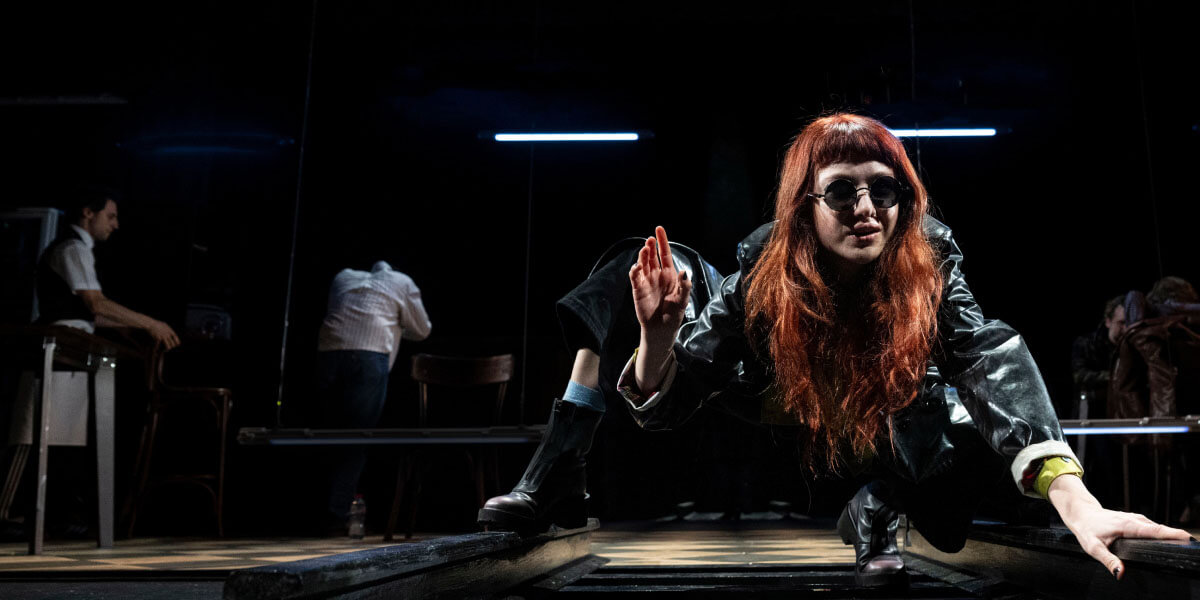
Mirandolina (Gaja Masciale) is a beautiful young woman who works in an Italian restaurant in Dublin. Lively and vivacious, she has attracted a number of suitors from among the men of the area. She occasionally flirts with them, but is mostly irritated by the attention of men who are, in many cases, considerably older than she is.
The arrival of one particular man changes things. Rip (Riccardo Gamba) comes into the bar and largely ignores the other customers, choosing instead to focus on his drink. Following an argument with Rip, Mirandolina decides to seek revenge.
“It’s dangerous to play with a young man’s pride.”
“And what about a young woman’s pride?”
Mirandolina, or The Mistress of the Inn, was written by the Italian playwright Carlo Goldoni in 1753 and is considered a masterpiece of Italian theatre. Marina Carr has taken this source material and created a new version of Goldoni’s original. The production brings together the unusual combination of an Italian cast and an Irish creative team, with Caitríona McLaughlin directing. The play has been translated by Monica Capuani and is performed in Italian with English surtitles.
The stage is a flexible space, designed by set and costume designer Katie Davenport. Primarily functioning as the restaurant, it also transforms into a train carriage and a kitchen, among other locations. Paul Keogan’s lighting design contributes significantly to the atmosphere, helping to shift the mood and sense of place throughout the production.
While it is not unusual to see a play with surtitles on the Abbey stage, they always present a particular challenge for theatre-makers. Although there were many Italian speakers in the audience at the performance I attended, the majority were reliant on the translated text. The main screen was positioned high above the stage, making it difficult to read the surtitles while simultaneously watching the action below. At the interval, the surtitles had become a topic of much conversation, particularly among those seated towards the rear of the theatre.
The play is billed as a reimagining of the original and, as one might expect, Carr makes several substantial changes to make the work her own. One of the most striking ideas is the presence of ghosts who inhabit the restaurant. This is an impressive concept, allowing for a series of monologues that give the audience a fresh perspective on the histories and experiences of these characters.
The collaboration between translator and playwright, alongside the various theatres and cultural organisations involved, demonstrates an impressive degree of forward thinking. The production premiered in Treviso in February before travelling to Belluno, Venice, Padua, Verona, Rijeka and Milan. It forms part of Cultúr 2026, the cultural programme surrounding Ireland’s Presidency of the Council of the European Union.
The production introduces a play with which many Irish audiences may be unfamiliar, while also bringing an Irish playwright’s work to audiences who may not previously have encountered Marina Carr. Collaborations of this kind open doors and forge friendships between cultures — something that is an important part of the European project, demonstrating that the EU represents more than simply an economic relationship.
The production contains many impressive scenes, with the ghostly visions particularly effective. There is, however, a curious imbalance in the final moments. Despite the considerable amount of stage time given to developing the story and its characters, the ending feels somewhat rushed.
Nevertheless, the production creates a fascinating collection of characters and offers a dark, often unsettling vision of the battles and pressures many women continue to face in modern life. Carr’s reimagining gives Goldoni’s classic a distinctly contemporary edge, while the Italian-Irish collaboration makes the production an especially interesting cultural exchange.
Credits
Father: Alex Cendron
Fiori: Denis Fasolo
Rip: Riccardo Gamba
Ethel: Margherita Mannino
Mirandolina: Gaja Masciale
Great-grandfather: Giancarlo Previati
Fabrizio: Massimo Scola
Alba: Andrea Tich
Mother: Sandra Toffolatti
Writer: Marina Carr
From: ‘La Locandiera’ by Carlo Goldoni
Translator: Monica Capuani
Director: Caitríona McLaughlin
Set and Costume Design: Katie Davenport
Lighting Design: Paul Keogan
Composition and Sound Design: Anna Mullarkey
Assistant Director: Martina Testa
Assistant Set and Costume Design: Florentina Burcea
Categories: Header, Theatre, Theatre Review


