
Q&A with Eamon Carr – Visions of America 1978–79
Eamon Carr ‘Visions of America 1978–79’ Photographic Exhibition SO Fine Editions 11 June/ Limited Ed book
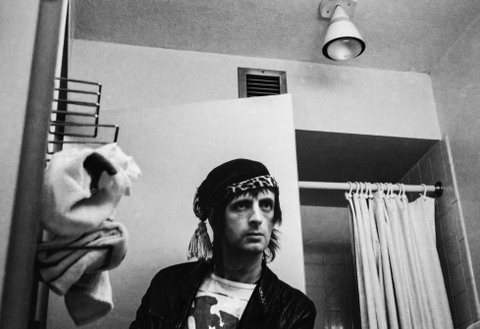
“A major new photography exhibition by Eamon Carr, documenting the vastness, contradictions and energy of late-1970s America, will open in the Music Room in collaboration with SO Fine Art Editions and Powerscourt Townhouse Centre on the 11th June at 5pm and will run until 19 June.
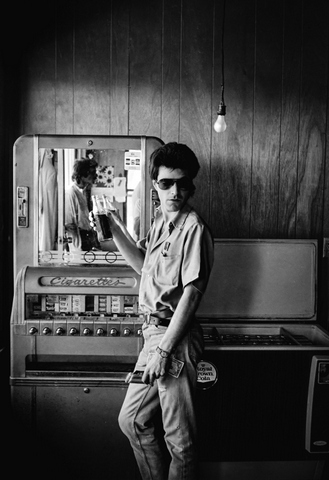
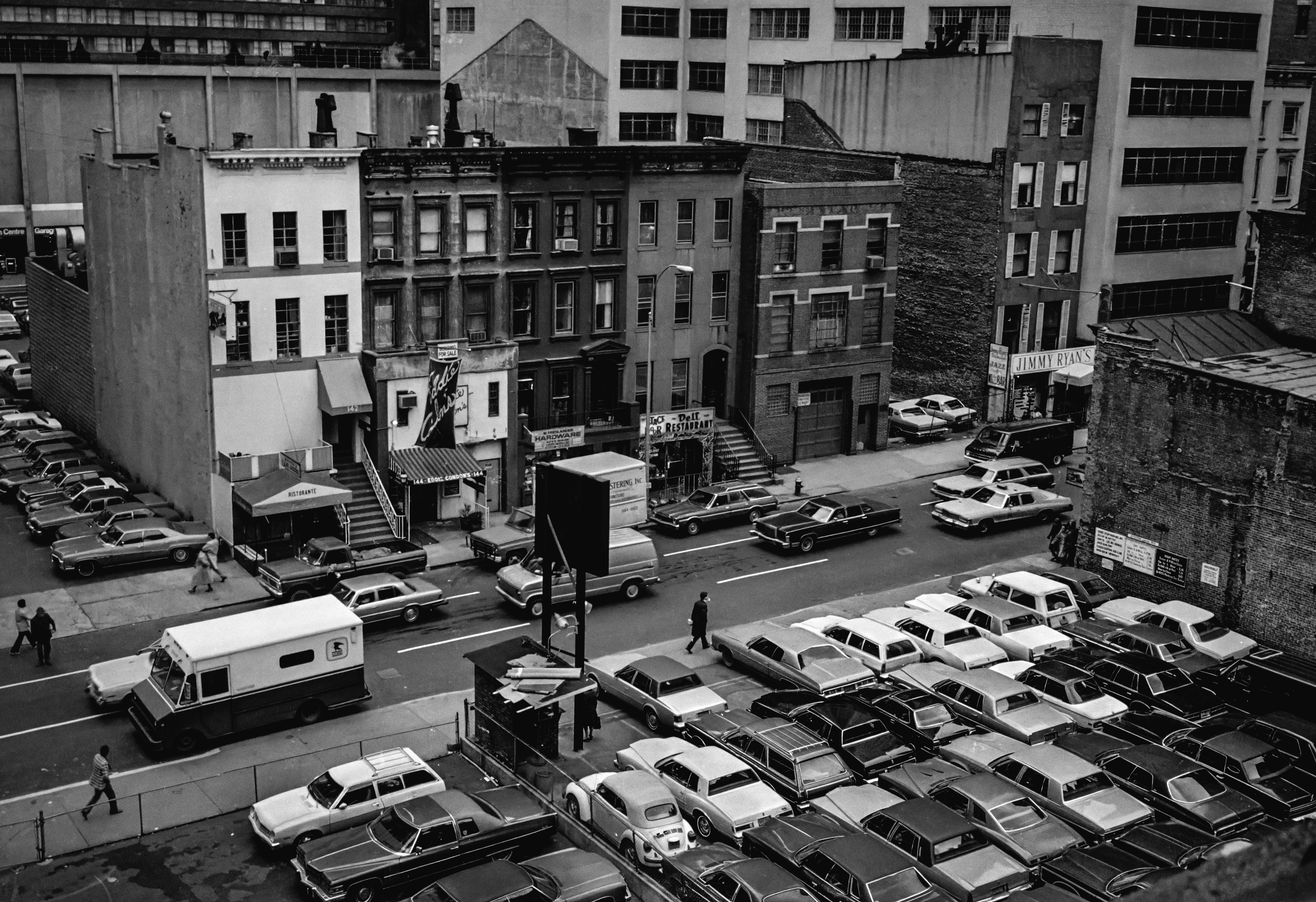
Visions of America 1978–79 brings together a striking collection of photographs captured by Carr while travelling extensively across North America with Horslips during 1978 and 1979. Shot during a period of relentless touring, the images trace a restless journey across the States – from New York to Los Angeles, Michigan to Texas, Seattle to Miami – capturing fleeting encounters, roadside moments, urban textures and landscapes that together form a vivid portrait of America at the close of the 1970s.
The exhibition emerged following conversations with Garry O’Neill and Niall McCormack, the duo behind the influential photographic celebration of Dublin youth culture and street style, Where Were You?, and founders of Hi Tone Books. Encouraged by O’Neill and McCormack, Carr began digitising a cache of long-unseen film negatives, uncovering hundreds of photographs that had remained largely unseen for decades.”
All photos by Eamon Carr
The photos were mainly taken during the late 70s when you were touring. Can you tell our readers a little about that time in your life? Was it your first trip to America?
I had a brief inconsequential visit to New York with Horslips around 1973 but when the Book of Invasions album began getting traction for DJM, the label set up by Beatles and Elton publisher Dick James, the industry beckoned and so, apart from various promotional visits, we wound up doing a series of 90-day tours, coast to coast, during 1978 and 1979. It was fascinating in many respects not least because we got to see, and work in, areas of the United States that weren’t on the obvious tourist routes. It was intense. And, despite years of exposure to American music, movies and novels, I still experienced culture shock.
I’m reminded of Captain Sensible’s (The Damned) reply when asked what he liked most about America, “The free beer.” It felt like America just wanted to party and whichever band was in town became the centre of the action. Stamina was required.
What interested me with this project was that Niall and Garry at Hi Tone Books didn’t want a band book. Like me, they were more interested in the peripheral images. The quirky shots. The Americana. That’s what also attracted Catherine O’Riordan of SO Fine Art Editions, who’s curated the show. Time appears to have enriched some of the visuals which now feel as if they’re from some forgotten American TV series or low-budget movie.
When did you become interested in photography?
The “Beat Boom” of the Sixties happened at just the right time for me. When I was a child, Ireland was a dreary place. But the cultural explosion that occurred when I was hitting my teenage years proved a godsend. Suddenly it felt as if there was hope.
Music, Pop Art, fashion, exciting new voices in print and on British TV meant things felt attainable. As part of this style revolution, photographers were contributing thrilling images to the conversation. The names I was seeing in fashion and style mags became iconic. All obvious now. Astrid Kircherr was possibly the first for me. Wonderful black’n’white images. Then David Bailey, Don McCullin, Brian Duffy and Terence Donovan. It was a long list. And exciting. Back then, there was a buzz around the advertising industry so that’s where I went.
What photographers inspired your work, if any?
The first photographer I got to see at close hand was Tom Connolly in Arrow Advertising. An obliging man. As a copywriter-visualiser in Arks, I worked closely with many influential snappers including ‘Spud’ Murphy, Ian Finlay, Norma Farley and Tony Higgins. I was fascinated by how they worked and learned more than perhaps I realised. Frank Sheerin, the copywriting legend, encouraged me to buy a camera and take photos as a hobby but I never got around to it. All of those who photographed Twiggy and Jean Shrimpton were probably the ones who influenced me most. And Charles O’Connor, of course. Like Brian Ferry, Ian Dury, Ron Wood and so on, Charles was a proper English art school creative. His conceptual range was immense, and he’s an excellent photographer. He made things look easy but, having shared a house with him, occasionally collaborating on stuff, I could see how meticulous he was and how he could create a sense of immediacy.
What camera were you using at that time?
Not having a clue about the technical aspect of using elaborate cameras, I asked an American crew member called Bob DeJessa, who was never without a camera, for advice. Between him and the guy in a camera store in Texas, we settled on a Canon which, for me, had two important features. One, it had a great lens and two, they assured me it was idiot proof.
Photography was very different in the late 70s, due to the cost/ skill level required. Do you think the mobile phone has changed the way we view photography?
I would sometimes feel guilty that I didn’t make an effort to become more technically adept. But I was lucky in that the Japanese camera I bought in the States wasn’t prohibitively expensive and also that it did most of the heavy lifting for me. I later bought more compact cameras, including an Olympus, which was easier to carry on journalistic assignments. I had a small show of photos from the Kosovo/Albania border, during Serbia’s war on Kosovo, on display as part of the Festival of Politics some years back. Being incredibly lazy, as soon as my phone could take decent pictures, I began using that and allowed the cameras to gather dust. More guilt.
You’ve worked in so many different aspects of the arts/ journalism over the years. Is there anything left you’d still love to explore?
Very early on, it dawned on me that as a writer, for better or worse, I was documenting stuff. When I was at school, I was enthralled by the work of the philosopher Xenophon and how vividly he chronicled everything. In a similar fashion, in the early 1970s, the work of painter-poet Adrian Henri and the Liverpool Scene group, was an enormous influence on me. That brings us back to Pop Art. Those influences served me well writing for Horslips. I suppose I began taking photographs to capture moments and images that I mightn’t have had time to depict in print.
Working with the great Justine Doswell, I used dance effectively in a play (Dusk). And I have quite defined ideas on how dance, choreography and body movement might best convey certain narratives. Who knows, I may yet get an opportunity for further explorations in this area.
Visions of America 1978–79 – Opening on Thursday 11 June (5-7pm) – Running until Friday 19 June (5.30pm)
The Music Room, beside SO Fine Art Editions, 2nd Floor Powerscourt Townhouse Centre, D2. 087 2549884
Opening times 10 am – 5.30 pm Mon – Friday and 11 am – 5 pm Saturday.
https://www.powerscourtcentre.ie/
https://hitonebooks.ie/
https://eamoncarr.ie/
Categories: Header, Music, Photography


