
 The Cult – Love Removal Machine
by Killian Laher
A Song and What It Means To Me
Growing up in the 80s, there wasn’t an awful lot of good rock music around. Heavy rock seemed to belong to the seventies, and in a post-punk guitar landscape, it seemed very old-fashioned. And as for metal? It seemed to be the preserve of mullet-haired, denim jacket-clad oafs. Though I was too young for punk, in my teens punk sensibilities still held sway: guitar solos, long hair and leather trousers = bad. The so-called metal of the mid-eighties was very much of the ‘hair metal’ type, Def Leppard, Van Halen, Motley Crue. Cheesy, poppy and awful. You might hear an ACDC song at a disco but the ‘cool police’ disapproved, so I didn’t really give it a chance.
In time I discovered that it wasn’t so straightforward. Bands like The Sisters of Mercy, The Mission and The Cult harked back to 70s rock in their interviews and their sound. The Cult had made some impact with She Sells Sanctuary, which even got played at discos I frequented. Love, the album it came from had plenty of quality guitar tunes such as Rain and Revolution.
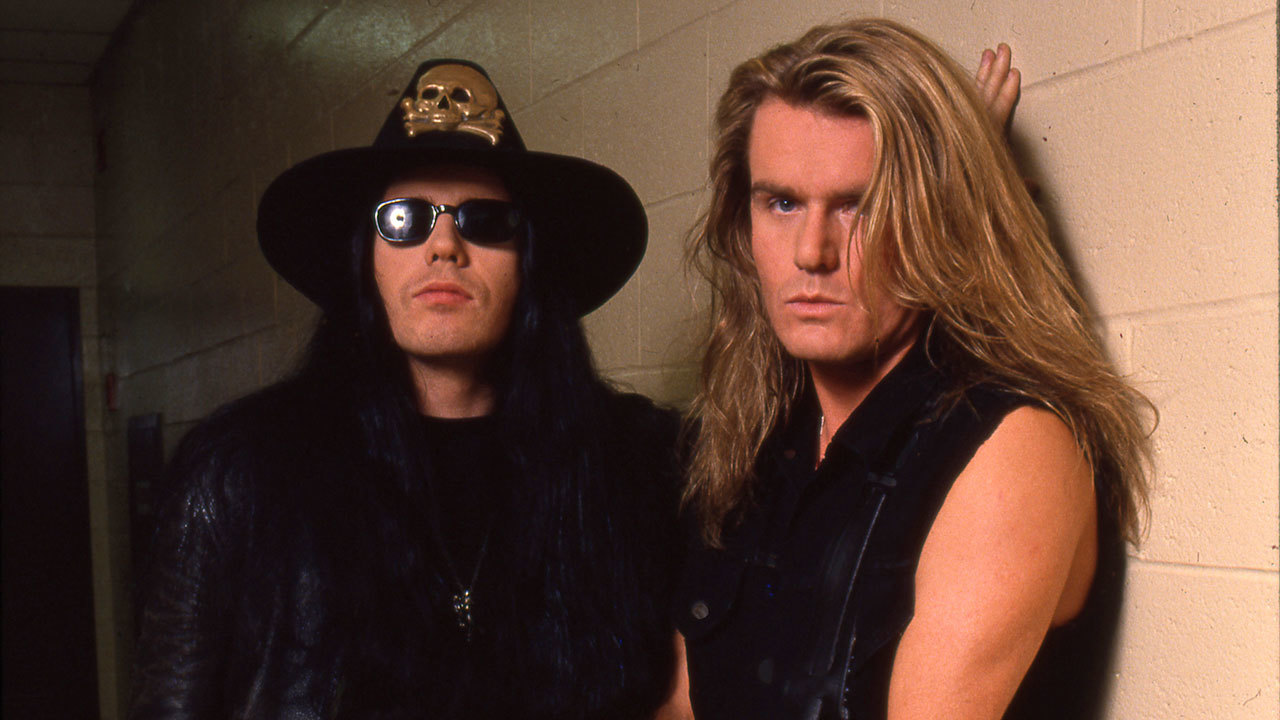
In 1987, The Cult appeared on Top of the Pops to play the first single, Love Removal Machine taken from their upcoming album Electric. In those days there was very little music on TV. Top of the Pops was a must-watch, even though 90% of it was absolute crap. Turning it on meant certain judgement by my parents, i.e. was *this* the kind of stuff I liked?? Sitting through Phil Collins, Starship, Rick Astley or worse to try to hear something good. But the TV listings said the Cult would be on, so I was full of anticipation. Of course, nobody could actually *know* this, as to admit I liked a band called The Cult would have led to interrogation from both parents and my peers.
When The Cult came on I couldn’t believe it. Gone were the cool, black-clad (except Ian Astbury) pseudo-goths. Replaced by a bunch of metallers, complete with bad metal hair and leathers! Christ, I thought. Then I heard the song. Again, Christ, I thought. But for a very different reason. Billy Duffy’s staccato metallic riffs sounded like nothing else I listened to. They were almost cartoon-like in their eagerness to embrace heavy metal. The band falling all over each other as Astbury yelled profundities like “baby baby baby baby baby I fell from the sky”. Yet they sounded bloody brilliant, with Astbury bawling over the top like a, yes, ‘rock god’, something I had pretty much dismissed up till then. Now I just wanted to punch the air with glee. Just when you think the song is over, it speeds up for an almost gloriously dumbass ending.
I couldn’t get enough of it. But it was hard to find, too heavy for mainstream radio and too metal for the Dave Fanning show. I spent weeks trying to tape the song from the radio before eventually succeeding, then the follow up Lil Devil, before getting hold of the album, which stuck out like a sore thumb in my collection. They unleashed the dormant metal gene that lurked within me. I blame them for pointing me back towards The Stones, Stooges and Led Zeppelin and forward to all of the grunge that came later. Unfortunately, Astbury, Duffy and co never sounded this good again, though they had their moments.


 No More Workhorse
Awesome! I was a huge fan, great band!
Great read. Fantastic band and Electric and Love still get outings all these years later. But I absolutely love American Gothic from Beyond Good & Evil. Damn, it’s 20 years old now and I still think it’s a recent track of theirs.
May I respectfully disagree? Thank you.
The true Cult fan knows very well that the best album of the band is the one they’re releasing next. This was as true of 2021, when you wrote this article, as it is of 2024, when I’m adding this silly comment, and it’s nothing more than the acceptance of an artist means. A true artist (besides wanting to get paid for their work) does not want to release something and say, ‘There you go, this is my masterpiece.’ That would be admitting that the artist has nothing more to give. Some, certainly, do exactly that — they search for their audience, their niche market, and stay there, producing the same work of art over and over again, never changing, never improvising, lest their audience stops paying them for their work, of course.
The Cult have long, long, long ago given up on that formula; even their second album was already moving away from Goth and experimenting with new sounds. Most definitely since Sanctuary — which, for many former fans, was either ‘the’ breakthrough album, but for others, it was definitely a disappointment, something ‘completely different’ but branded as ‘The Cult’.
Well, guess what. Self-branding and self-inventing oneself is the mark of the truly great artist. Sure, it might be difficult to grasp that concept. But, as an artist, does your audience view you as a source of wisdom, knowledge, and beauty, or merely as a machine, spewing out the same thing all over again? The Cult never wanted to be a one-album-band — hey, great, we had a huge success with She Sells Sanctuary, we got tons of money with the royalties, who cares about doing something new when the old sells so well?
Instead, the Cult are a band that are on the road. The albums are just the tiniest slice of creativity, condensed in a package ready to be consumed. You’ll never hear the Cult on stage playing one of their hits exactly like they have recorded them. The Cult are not Taylor Swift — no disrespect intended, she is a great artist in her own market! — who does a whole tour of 30 or 50 cities, and each performance is exactly the same, to the tiniest detail, in order to keep the fans happy; nobody can ever claim that they had been on a less-than-perfect live show with Taylor Swift. That, by definition, doesn’t exist. All are perfectly masterpieced together in a single performance, repeated over and over again, perfect in every detail.
The Cult is the extreme opposite of all that. What’s a song?… a collection of chords, a few lyrics, some rhythm here and there. But put these few tidbits in the hands of a skilled musician, and there are infinite variants that can come out of it. Put it in the hands of pure geniuses and outstanding virtuosos… well, the sky is the limit.
Nobody knows how many variants of Love Removal Machine exist. I have, I think, at least four ‘official’ recordings, i.e. those that were ever stamped on a CD. But there are hundreds, thousands. On each tour, a dozen new variants will be added to the list. Sure, all fans will recognise the key elements that make the song be what it is; sure, all will recognise ‘the Cult sound’ once it starts; sure, all will be amazed at this guy in his early 60s, jumping on stage as if half the age, doing a non-stop show for 90 minutes, with a voice that today would get Freddie Mercury green with envy. And Billy Duffy? Well, the guitar plays itself — he actually shows that off on stage. He’s so good that Ian can switch from a song right in the middle, move to a different one, and Billy will seamlessly transition from one to the other, to the utter amazement of the crowd, with a few virtuoso riffs, and possibly an imperceptible key change; that’s the sign for the rest of the band to instantly figure out that something has changed. The crowd goes wild, ‘This is not the right song any more!’ Or: ‘Ian, you forgot the lyrics again??’ But instead we’re looking at art being created, in front of us, for our exclusive delight and pleasure, into an ephemeral composition which will never be heard again (as the band seldom allows recordings to be made), not in its exact form.
The real groupies usually sign up for every city that the band will perform. I asked one of those die-hard fans once, while on the queue to enter the event venue, ‘so, what will they play on this tour?’ And they shrugged and said they really had no idea; they had been on the tour for three or four cities now, and every time the alignment was different, and even the songs that were the same would get played in completely different ways.
I heard some of their oldest classics, which were intended (at the time of recording) to be something like metal blues, now played as if they were hard rock. Or perhaps it was even metal? I can’t say, and that’s the beauty of it. The Cult is a rock band, so whatever they play, whatever comes out of their instruments, is technically some form of rock. But you never know which one. And it’s very rare that the same song will always sound the same. I’ve got a techno version of She Sells Sanctuary — played and mixed by them. That’s so funny, so outrageous, I couldn’t believe it was ever made by the Cult, I thought that someone was just playing a prank on the fans! But no… why, if Ian wished, he could sing what Taylor Swift sings, and let the rest of the band make he song sound just like a Cult song is supposed to sound. Even today, people play the Cult version of Born to Be Wild without noticing that this is hardly the original; and there are several very good covers of it. But there is just one version which could only have been covered by the Cult.
You know what’s so uncanny about the Cult? Well, on all their songs, even the earliest ones, you can hear how everything is pitch perfect and the timing is absolutely correct, for all instruments (and voice!), to the microsecond. But, of course, we say that this is just “studio stuff”, they are, after all, recording the tracks in a way that they sound perfect, and whatever might have popped up which is out of place, can then be re-recorded again, over and over, until it’s flawless. Or — at least in the 21st century — you can digitally enhance the bad bits and just skip the (expensive) recordings.
On stage, however, even with an outstanding sound engineer, things are different. They are, well… live. There is no room for failure. You can’t simply stop and say, ‘oh, let’s start again, this sounded so much better in the studio’. And, indeed, many bands do just that: they have special versions on stage, which are easier to play, while still faithful to the original in many regards. And… well, they might not be so ‘perfect’ in all the details. After all, it’s live. Glitches happen. The wrong guitar string is lightly brushed over, and there is an almost imperceptible dissonant chord for a beat; that’s ok, we’re fine with that, humans are not machines, everybody makes an error, and, anyway, nobody did really listen to that, right? Except perhaps the odd person with perfect listening in the audience? Did it even make a real difference? Maybe this was actually an improvement? Who knows, who can say?
That’s what I expected to happen on the first concert I attended. What baffled me was not even the extraordinary creative work behind old songs which were twisted and changed to have a completely different sound (better than the original? Well, I liked them much more that way; but now I know I won’t ever be able to hear that version again). It was not even the energy they display on stage, and the ease with which they engage with the audience; that is something we always expect from professional musicians. No, what amazed me was how everything was played perfectly. There was not a single note out of tune; not a single beat just ‘slightly off’; nothing. The whole band performed on stage exactly as if they were on the studio: perfect, flawless, from the intro to the ending. Even the improvised solos seem to have come out of the mind of a Vivaldi — and performed by a pitch-perfect machine. Now that was uncanny. These guys are merely human, after all. But I can certainly believe that they are able to pull off a single studio session, record the song once, and say: ‘all right. That was perfect. Thanks guys, see you in four or six years again’.
I know that this is not the case, of course. But that’s what it feels like. They are so professional, so perfect in their delivery, that… well, they would get Taylor Swift green with envy, too, and she cheats — she has lots of contemporary stage tricks to replicate her concerts flawlessly. The Cult doesn’t. If Swift appeared on stage, and dared them to play the same song exactly again, they wouldn’t. They would play the same song, sure, but it would sound as if it came from a different album. It would still be perfect in all regards. It would sound as if, like Swift’s team, they had practiced that variant for weeks after weeks after weeks, until everybody would know all the minute details by heart. But that’s not how they play. They could deliver one song for the whole concert — aye, all 90 minutes or so — and play 30 completely different things. All of them would sound as if they had come fresh out of the studio; all would sound as if that was the actual sound they had always intended; but with every subsequent playing, we would say, ‘no, wait; this is how it was supposed to sound!’. And… on the next tour stop, they would perform another thirty variants, all of them flawless.
That’s what I mean when I say that the best Cult album is their next. There is just one thing we know about the next album: it won’t sound like any of the others. Some fans will like it; some will not. The band won’t care. The album after that will be even more different, anyway.
However, it will still sound like the Cult. And that’s the most amazing thing of the band, really. They could turn ‘Oh Christmas Tree’ into a Cult song, if they wished, and we would always wonder how the original Christmas carol sounded like. We would only remember their cover.
It’s 2024 for me. Ian and Billy are in their 60s, and it’s insane what energy they put on stage, show after show, city after city, for extended periods of time, with little rest between stops. I live in Portugal, a tiny country (compared to the larger, much more populous European countries), and it’s very rare when the Cult visits us. This year they were extremely bold — they booked reasonably-sized venues in two cities. Two cities, merely 300 km away from each other! That was crazy — a year before, I had been at Madrid, home of millions, and they filled a private venue with some 2,500-3,000 people, at best. Which was not bad at all, mind you! Well, we all expected that at least one of the concerts would be cancelled, and the other one be either half-empty, or move to a much smaller venue.
Not only both were fully booked, that there have been so many complaints about fans wanting to attend either of them, that, as a surprise, they managed to give a third concert, a few months afterwards, at a summer festival here. That was completely unforeseen (and even the fans were taken by surprise; when we realised that this was not a joke, the tickets had all been sold). So… sure, they don’t fill stadiums with half a million people any more. But their fans still know very well how good they are. And most of them — while being oldies like me — don’t come to watch them performing their old songs. We all know how they sound; we have their records. No, what we want is for Ian & Billy to surprise us, with new twists, new variants, and sure, why not, new songs too. A track from their Death Cult days, played today, does not even remotely sound like it did in 1983 or so; it’s the same song by the same band, sure; but it’s completely different in every regard.
It still sounds as a Cult song should sound, whatever that is supposed to mean.
Finally…
To those who think that Ian ‘lost his voice’ or somehow ‘cannot perform the same songs as he did in the past’, well… think again. Or rather: come to a concert and listen. Oh, it’s Ian, all right. But now we’re listening to Ian in his mature voice: the voice of a singer with decades of experience. He doesn’t sound like a frail tenor of the 1980s (which he never was); he sounds just like what a professional, hard-working, knowledgeable baritone should sing — on an Opera, or on a stage with the Cult. Aye, he’s still that good. No, I lie: he’s actually much better, now that he doesn’t need to ‘pretend’ to be ‘yet another rock star with a tinny falsetto tenor voice’. Now… he roars. But still reaches his three or four octaves without the least effort — and is pitch-perfect on each one of them. And — look, mommy, no auto-tuner!