
Q&A with John Scott – Irish Modern Dance Theatre – Physical Landscape
Choreographer and artistic director of Irish Modern Dance Theatre, John Scott, tells No More Workhorse about his latest production PHYSICAL LANDSCAPE, soon to premiere at Project Arts Centre – and the changes that have taken place in the Irish and international dance scene over the last 35 years:
PHYSICAL LANDSCAPE –
Dates: St Kieran’s Hall, Cloughjordan, 25th October 2026
Project Arts Centre, Dublin, 27th – 31st October 2026
Black Box Theatre, 2nd November 2026
How fully formed are your productions when you start rehearsal? Do you have a number of ideas you want to explore, or is it more established than that?
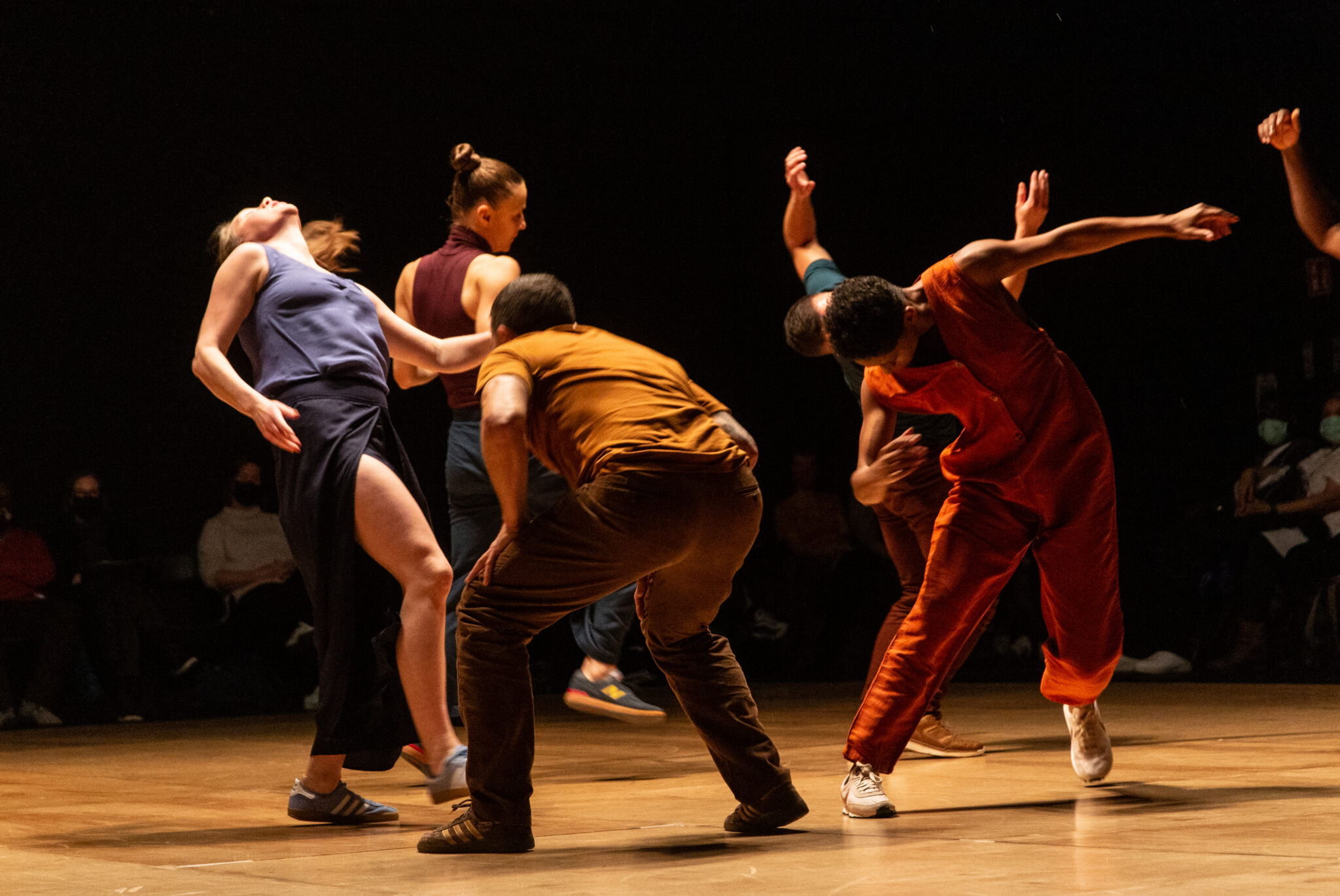
I write a text and take notes before setting foot in the studio. When I’m making a new work, I’m doing a lot of research, looking at Music structures and also writing self-analytical tests about where I am in my life and what is necessary as the next evolution or priority in my choreography. For my new show, Physical Landscape, I’ve been very influenced by a Taiwanese detective series, plus it’s been unavoidable not to be alarmed and affected by the current horror and wars and rise of fascism that is happening. This is not a piece to directly address that, but it’s in the air, and I sincerely want us all to survive it and find ways to resist it. Physical Landscape encompasses a work called Physical Universe that I created for Five Lamps Arts Festival in April earlier this year. It is constructed as a map or survival kit to find a way for six dancers (Alessandra Azeviche, Boris Charrion, Bruno Senune, Favour Odusola, François Malbranque and Magdalena Hylak), one choreographer (me), one composer (Jürgen Simpson) and one Lighting Designer (Eric Würtz) to fight a way out and make a landscape to play freely like children, move, breathe – and maybe dream again. I acknowledge but refuse to be engulfed by society’s horrors: injustice and dehumanisation, but in the creation process, we acknowledge it. In the studio, after considering the plans, the texts, the priorities, we find together the dance and way to frame it. It’s a very physically strong, virtuosic cast, and they are going to fly with urgent physicality and energy. But a virtuosity informed by our reflections.
This production aims to explore “ecology and nature”. It is obvious how important a topic that is, but how do you explore it through dance?
In the studio, we research ways of moving – in these horrible times of Genocide and the rise of the far right and environmental apocalypse – by thinking of ‘the other’. We reflect this anxiety but try to move with hope and use breath and some techniques I share with the dancers from my singing practice, and experiences working with renowned American creative I look up to, Meredith Monk, to generate some of the movement. Monk has a broad spectrum approach to her work where she has been a composer, performer, director, vocalist, filmmaker, and choreographer – or a mix of these great talents that she has finely honed.
The six dancers in the show have very different ways of moving. Our technical base is Merce Cunningham contemporary technique – we have had close links with Merce Cunningham Trust in New York for years, and we perform his work. His technique uses elements of ballet combined with a free-flowing spine, which allows strength and the capacity for explosive movement and clarity. Boris Charrion, François Malbranque and Bruno Senune are powerful contemporary dancers from European conservatories, fluent in many techniques. Favour Odusola’s style fuses Yoruba heritage with contemporary Nigerian movement; Alessandra Azeviche has contemporary dance plus Capoeira and Afro-Brazilian influences. Magdalena Hylak is a stunning dancer who has also evolved her own unique practice and dances extensively with Algerian choreographer Nacera Beleza, using spinning and Sufi influences. We have also created the material with dancers Adam O’Reilly and Vini Martins Araujo. We use release technique for a natural quality. We move according to how our space and environment permit us. When creating the dance vocabulary, we bear this in mind. The first section of the piece is Physical Universe, which begins with games around the Alphabet. The dancers are in a shallow space forming a circle around the audience. Their available space dictates the way they dance in this section. It uses certain words, names and word games as movement triggers. We use some words around ecology and nature to create the dance, aware of the limitations. The audience is in the centre of the space. It has a feeling of a game or a lecture – it then starts to turn into a dance. In the second part of the piece, the dancers have a larger available space to dance and move – so the vocabulary is more expansive. The movements are inspired and informed by the language we use. We do not seek for the movements to have an overt narrative meaning. Rather, we create movements and approach the space to allow the dancers to find inspiration, pleasure and freedom in their movements in the landscape created by the lighting design and performance space.
You seem to often work with the same dancers in your productions. Does it speed up the process if you have a type of ‘shorthand’ with the performers?
In Physical Landscape we have one new dancer, Bruno Senune from Portugal. He fits in beautifully with the cast – some of whom have worked with me for over ten years. Bruno has interesting movement qualities and presence that is very new for me. Both myself and the dancers are inspired by the new possibilities and also the challenges this presents. I am always very moved that many of the dancers still choose to work with me after a long time and that we both feel we still have unfinished business and new areas to explore together. It’s true that over the years I have evolved my own vocabulary and terms of reference which we use when we make the work. We do tend to work fast, but the performers are very courageous and relish the challenge of taking a risk. It is maybe an artistic risk or dancing with huge energy and intensity. Each piece we create really only becomes finished in a live performance setting, with the audience exchanging energy. I also find that, when touring to different locations, it gives each performance a new term of references, as audiences and how they receive the work differ from place to place.
You have been working in Dance for 35 years. Can you explain the main differences you see between today and the early 90s in Ireland?
When I started my company, most of the existing dance infrastructure: Irish National Ballet, Dublin City Ballet and Dublin Contemporary Dance Theatre had been shut down and had funding removed. I was part of Dublin City Ballet. There were very few people working in dance, and many dancers were emigrating. Since then, the Arts Council of Ireland and local authority funding have increased for independent artists and small companies. There are several excellent companies and independent artists based in Ireland now as a result. Our work at Irish Modern Dance Theatre tours internationally too. We just returned from performing in Italy, and my next work in 2027 is a commission in Philadelphia for Penn Live Arts. It will come to Ireland in 2028.
The Arts Council is now funding a national all-island dance company. I was a founding board member of Dublin Dance Festival, and there are festivals all over Ireland supporting dance now. In 2019, I founded Dancer from the Dance Festival of Ireland, identifying Irish choreography, and this year we had over 40 Irish choreographers present their work.
There is also increased confidence among Irish dance makers. My dear friend and colleague, Oona Doherty, based near Belfast, is a major International star in France, Germany and the USA. In 2020, I was elected to Aosdána, which now has seven choreographers in its membership. It’s great to see the growth of Dance and the increasing respect it is being given as an art form here in Ireland.
John Scott and Irish Modern Dance Theatre’s PHYSICAL LANDSCAPE previews at St Kieran’s Hall, Cloughjordan, Co Tipperary (25 October) and makes its official world premiere at Project Arts Centre (Space Upstairs) (27 – 31st October) – transferring to Black Box Theatre, Galway: (2 Nov.) – more info at: https://projectartscentre.ie/events/physical-landscape/


