
Do You Come From Gomorrah? – Abbey Theatre (Peacock Stage) – Review
A World Premiere Abbey Theatre production – Do You Come From Gomorrah?
Written by Frank McGuinness and Directed by Sarah Baxter
Photos by Ros Kavanagh
Dates: 10 April – 16 May 2026
“his cheek bones so beautiful I have to close my eyes in case he blinds me”
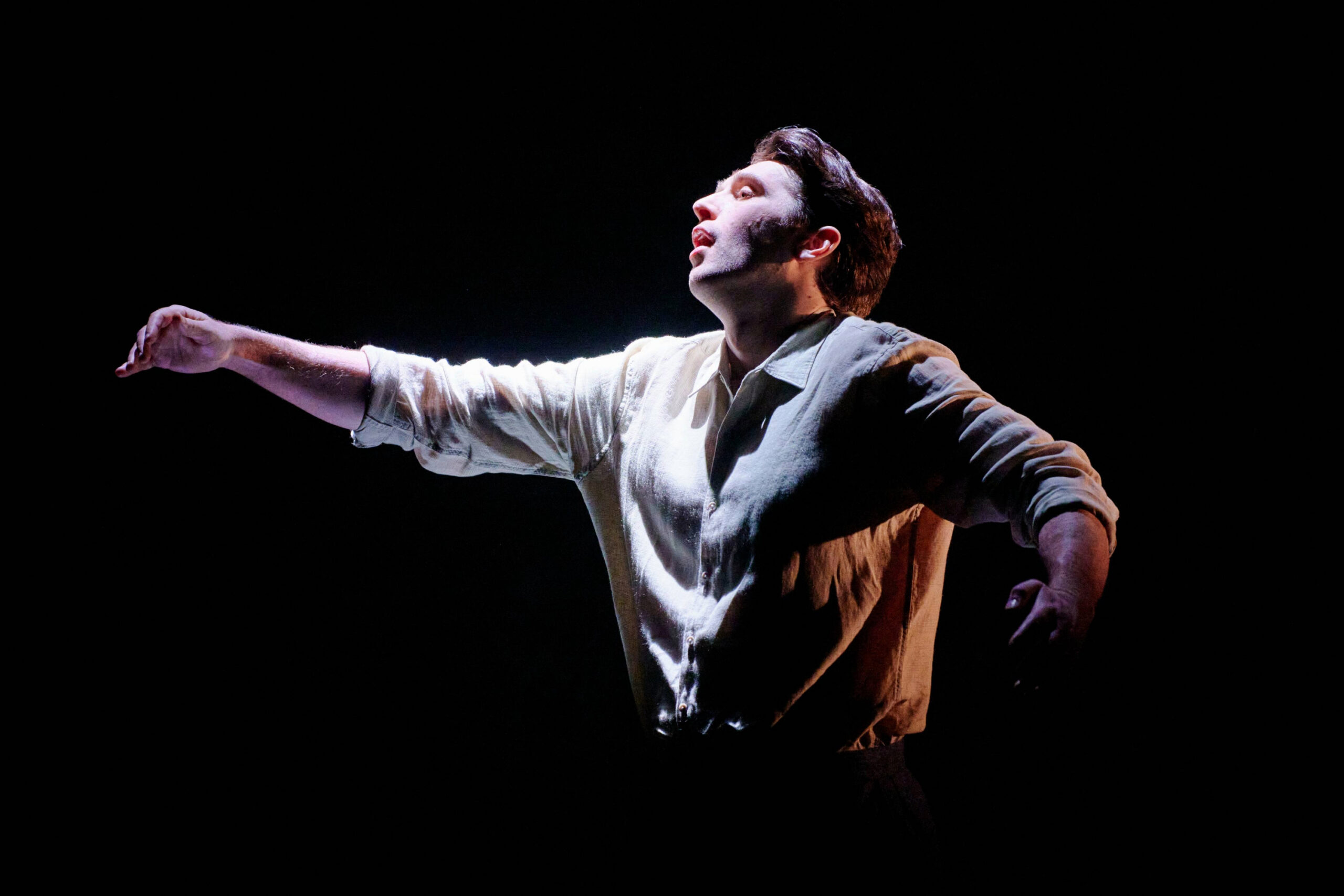
This is the story of a young, nameless Man (Ryan Donaldson) growing up in an institution in Northern Ireland. In the early part of the play, we briefly hear that his father left while he was still a child. His mother is mentioned for her kind and loving attitude when sober, and her violence when not. It seemed natural that he fell into the state’s care and ended up in this place. It is an institution similar to the Kincora Boys’ Home, where organised child sexual abuse took place. The inhabitants call it Gomorrah, which was the ancient city destroyed by God for the depravity of its inhabitants. Our main protagonist tells us of his time spent there and what he did to survive. He also tells us of his great love, another young inhabitant of the institution by the name of Keith.
“I do not like the past. It is not kind to me. It does not belong to me.”
The work is a memory play, a monologue delivered by Ryan Donaldson, as a Man taking us on a journey through his childhood. Donaldson was born in Lisburn, Northern Ireland. He studied at LAMDA, the London Academy of Music and Dramatic Arts. He is mainly based in London, and has appeared in the National Theatre’s production of Much Ado About Nothing and King Lear at the Globe theatre. He previously appeared at the Abbey as the titular character Tartuffe, in the 2023 production, which was written by Molière and adapted by Frank McGuinness.
The play has some interesting thoughts on identity, with the English soldiers calling him Paddy, despite him seeing himself as British and being from a Protestant background. There are a multitude of moments reflecting on race and religion that are suitably complex. Frank McGuinness grew up in Buncrana, County Donegal, so would be aware of the entanglements of race and religion in the North.
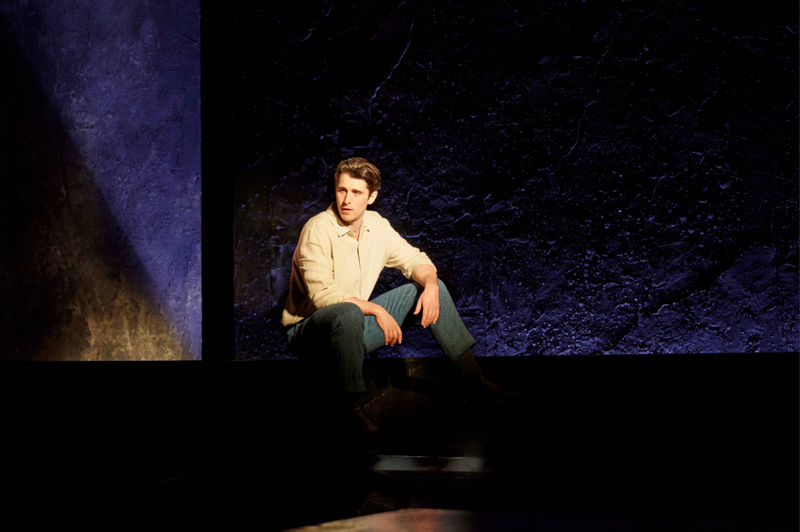
As a memory play, the set does not reflect any particular location mentioned in the text. Instead, it gives a space for Donaldson to move through as he delivers his lines. The backdrop is almost a moonscape, with a patterned and pockmarked landscape in grey. There is a raised platform for the actor to walk on, and a small pool of water at the front of the stage. The lighting design by Sinéad McKenna was important to set the mood and delineate scene changes, with a symphony of browns, greys and other muted tones.
It is not an easy night in the theatre, but it is not as troubling as you would expect. The worry with a play about this subject matter is that it will be unremittingly bleak, that the audience will be brought from scene to scene with a feeling of constant dread, but that is not the case here. We see the events through the eyes of the main character, who knows nothing else. There are moments of extreme abuse, but there are also moments of tenderness, humour and even young love. We do not hear a robust account of the events, but instead a fleeting succession of memories that stop and start, moments that bubble up in him for whatever reason.
It is quite a powerful piece and Frank McGuinness’s best work in many years. The topic allows McGuinness to discuss ideas on race, religion and sexuality, and there is much depth to explore in the writing. The performance by Ryan Donaldson is also impressive, with his haunting portrayal of a young gay man trapped in this traumatic world, along with a variety of other characters. He remains honest and sympathetic, drawing the audience in as an ally against the controlling powers. At 75 minutes, it is possibly a little too long for a monologue, but it would be hard to know what to omit. It is an important work and a highly suitable piece for the Peacock.
Credits
Man: Ryan Donaldson
Writer: Frank McGuinness
Director: Sarah Baxter
Set and Costume Design: Alyson Cummins
Lighting Design: Sinéad McKenna
Composer: Tom Lane
Sound Design: Martha Knight
Promotional Photography: Róisín Murphy O’Sullivan
Assistant Set and Costume Designer: Mar Parés Baraldés
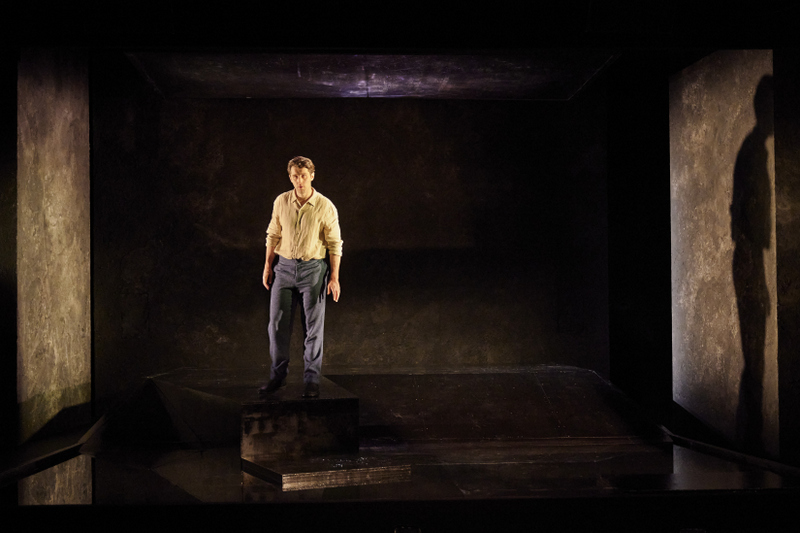
Photo Ros Kavanagh
Categories: Header, Theatre, Theatre Review


