
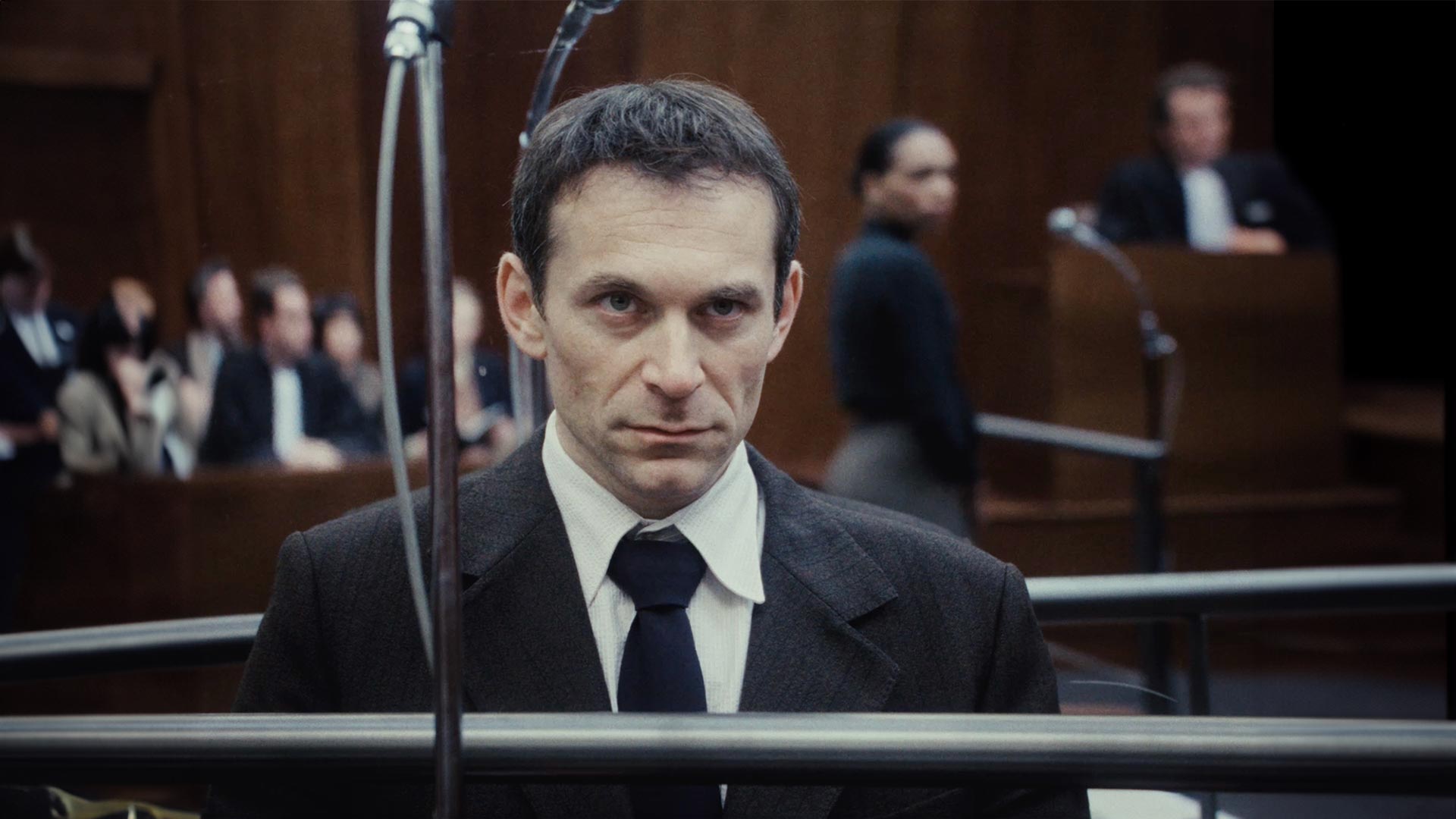
 The Goldman Case – Film Review
by Hugh Maguire
Director – Cédric Kahn
Writers – Nathalie Hertzberg, Cédric Kahn
Stars – Arieh Worthalter, Arthur Harari, Stéphan Guérin-Tillié
It seems we cannot get enough of courtroom drama. There is the never-ending Judge Judy but from Twelve Angry Men (1957) and To Kill a Mockingbird (1962), to Saint Omer (2022) and last year’s Anatomy of a Fall there is a thirst for the close focus of the courtroom. The stage version of Agatha Christie’s A Witness for the Prosecution (1953) is thrilling audiences at London’s former County Hall. There is no escape. Like some confined bear pit from Renaissance times, we are forced to see every facial expression and hear every sound and utterance, the close proximity adding to our own vicarious involvement in events. There is that frisson of being near a killer or possibly not a killer!
A lot of this tension comes to mind in this riveting, insightful courtroom drama. The Goldman Case keeps the viewer transfixed to the end on any number of fronts, storyline, acting, direction and of course the key question of the guilt of the accused. Set at a time when the French Republic still technically had execution by guillotine (abolished 1981), this underlying (if by then remote) threat also looms over proceedings. Based largely on a historical court case, or more correctly, a series of court cases, we participate in the trial of a Jewish leftist would-be revolutionary in 1960s/ 1970s Paris. Pierre Goldman (1944-79) admitted his guilt for several robberies but also stands accused of the murder of two women in a botched raid on a pharmacy. Convinced of his own innocence, which was the subject of an in-prison book at the time encouraging the re-trial, we see the accused battle his corner with absolute conviction – all the while fighting against the court procedure, advice and wishes of his own legal team, not to mention railing against the witnesses, the police, and the ‘system’ itself.
In 1995, the trial of O.J. Simpson (1937-2024) in California gained worldwide attention. It was not just a murder trial with a famed ex-football player and actor in the dock. Instead, it became a whole reflection on race and race relations in the USA, sadly as pertinent and divisive today as thirty years ago. Similarly with The Goldman Case, the issues of police bias, race relations in France, anti-Semitism, and discrimination seem as pertinent today as ever. Despite its length, the currency of that debate gives added anger and tension to this tight-paced work. Through deft camera work and editing, coupled with superlative acting, we ourselves are in that courtroom. We are torn between the prosecution and the defence and calmed by the very apparent balance of the presiding judge. Despite the criticisms of the ‘system’ justice is seen to prevail. Confined as it is to a singular space it would work superbly on stage but no body of actors could sustain that emotional intensity night after night.
Categories: Header, Movie Review, Movies


 No More Workhorse