
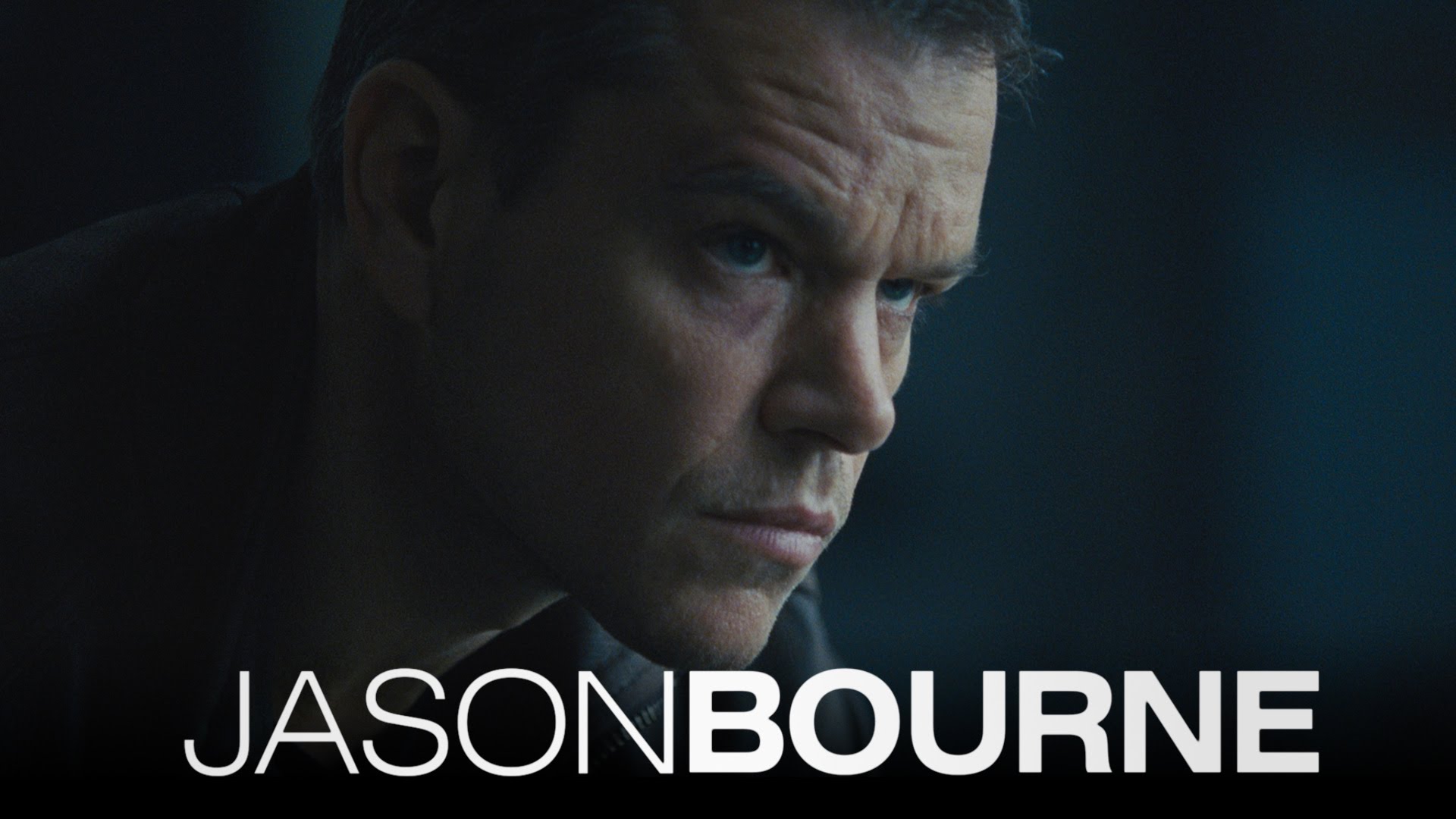
Jason Bourne – Film Review by David Turpin
Directed by Paul Greengrass
Starring Matt Damon, Alicia Vikander, Tommy Lee Jones, Julia Stiles
Leading man Matt Damon and director Paul Greengrass reunite for a third time on this fourth instalment in the successful “Bourne Saga” – the fifth if one counts Tony Gilroy’s 2012 spin-off The Bourne Legacy. If that sounds complicated, it needn’t be – all the Greengrass-Damon Bourne movies are essentially the same, and Jason Bourne is the most determinedly so of the lot. The interchangeability of this instalment with its precursors – The Bourne Supremacy (2004) and The Bourne Ultimatum (2007) – is so pronounced that Jason Bourne becomes the (very expensive) film equivalent of a DVD reissue in a shiny slipcase. It’s superficially “new”, but the second it ends you might find yourself wondering why you bought it.
That said, the lack of novelty isn’t necessarily a bad thing for fans of the series – who clamoured for Damon’s return after interloper Jeremy Renner attempted to don the mantle in The Bourne Legacy. The plot, which involves radicalised former CIA drone Julia Stiles enticing Damon’s Bourne out of retirement and into conflict with Tommy Lee Jone’s oily agency head and Alicia Vikander’s ambitious underling, gets fleetly from set-piece to set-piece. The chases are bountiful and well-staged, with the highlights being a motorbike-car chase through Athens and a destruction-derby style armoured car showdown in Las Vegas. As usual, the bone-crunching hand-to-hand combat is captured in Greengrass’s by now trademark quick-cut handheld style. It’s all done with the maximum efficiency – much like another day at the world’s noisiest office.
The changes to formula are minimal and mainly cosmetic. There are a couple of gestures to concerns about invasion of privacy and the security state – although the carefully cultivated air of paranoia is trumped by brand placement when Bourne uses Google to locate a target’s apartment. Elsewhere, the much-ballyhooed political awareness of this instalment doesn’t extend much beyond using street protests in Athens as a pretext to throw water cannons and burning couches at Damon and Stiles.
Damon plays Bourne with his usual slightly-stolid dependability, although the minimal development of the character over four films is beginning to look rather lazy. Those wondering how long it might take for the Bourne franchise to catch up with the oedipal fixation of the contemporary blockbuster will get their answer here, as – with grim inevitability – Bourne’s father issues become the engine of the plot.
Where there is a heroic deceased father, there must be a villainous living patriarch, and Jones takes to this role with a certain gusto. He brings a rare dash of amusement to a series that Greengrass has largely rinsed of the humour. Series regular Joan Allen is conspicuously absent, her task of staring intently at computer monitors now being handled by newcomer Alicia Vikander. Fresh from an Oscar win, Vikander ought to be a casting coup for the film, but it’s a dull part and she doesn’t do much with it. Vincent Cassel is underserved as a rival assassin.
When Jason Bourne winds up with the inevitable set-up for a sequel, one finds oneself wondering if the entire franchise is becoming a kind of inadvertent arthouse experiment in the idea of simultaneous kineticism and stasis. It must surely be some kind of achievement for a series of films to be so relentlessly action-packed, and yet to always arrive at the place from which they started. After the lumpier but loopier The Bourne Legacy, maybe that’s what series fans have been hoping for. In a paranoid world filled with conflicting shadowy interests, perhaps it’s a comfort to know that some things never change.
Categories: Header, Movie Review, Movies


 No More Workhorse
he is a great actor. I really like movies of his. thanks for article