
Goodnight Mommy – Film Review by David Turpin
Directed by Severin Fiala, Veronika Franz
Starring Lukas Schwarz, Elias Schwarz, Susanne Wuest
Austrian filmmakers Severin Fiala and Verokina Franz’s Goodnight Mommy arrives on a small wave of marketing hype positioning it as part of a new ‘horror vanguard’, alongside recent hits The Babadook (Jennifer Kent, 2014) and It Follows (David Robert Mitchell, 2014). The good news is that Goodnight Mommy is a much craftier proposition than Kent’s hammy and over-determined allegory; the bad news is that it could have done with some of Mitchell’s dreamy understatement. The real news, however, is that Goodnight Mommy ultimately reveals itself as having little to do with any such recent horror films, and a lot to do with a certain strain of European ‘endurance’ cinema that probably reached its apotheosis with Michael Haneke’s contentious Funny Games (1997 / 2007), and its nadir with Pascal Laugier’s execrable Maryrs (2008).
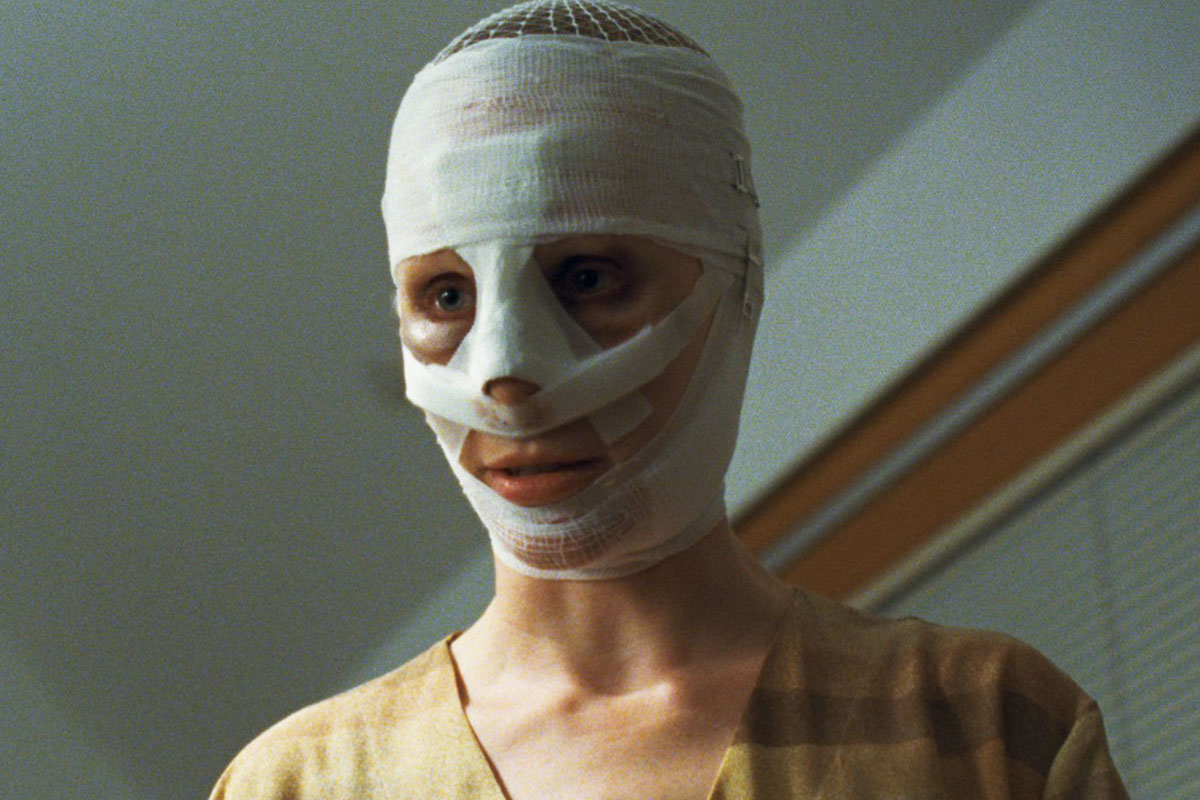
The tantalising set-up is the stuff of folklore. Twin brothers Lukas and Elias (Lukas and Elias Schwarz) live at the centre of a forest, in one of those frosty bourgeois interiors that adds a dash of torture chamber to the usual Sunday-supplement elegance. Their mother (Wuest), returns home from some kind of facial operation, swathed in mask-like bandages that daringly invoke Georges Franju’s classic Eyes Without a Face (1960). Dread begins to accumulate fairly quickly, as the brothers come to suspect – then believe with complete conviction – that the woman behind the bandages is not their mother at all.
The grip of the film’s central image – the demonic mother/stranger – is immediate. However, Fiala and Franz have something else in mind, and if it pays off in eye-wateringly gruesome fashion, it also defangs the film’s slippery oedipal mystery in favour of something more tangible, and more banal. Their stratagem also makes the film difficult to review since the incremental creep toward a final-act explanation seems to suggest that the filmmakers believe themselves to be performing a slow reveal of ‘twist’ information that was glaringly apparent, to these eyes at least, from the opening scene. What’s left is a very elegantly constructed trap that doesn’t spring – meaning that the power of the film emerges almost entirely from the incidentals rather than the grand design.
Those incidentals are often flesh-creeping, although never really frightening or suspenseful. Still, viewers with a fear of insects, super-glue and mouth trauma would do well to look away at various intervals, and the image of the mysteriously connected twins remains potent – even if Robert Mulligan’s underrated The Other (1972) used it to exactly the same effect in a strikingly similar story. ‘Mommy’ herself is a memorable grotesque, both masked and unmasked – although the haunting figure of the early stages eventually gives way to a grimly funny, but rather trite, gargoyle of bourgeois self-absorption.
The trouble with the film is that it the sense of eerie singularity it conjures is, paradoxically, rather familiar. While the governing influence here is the icy remove of Haneke, his rigour doesn’t seem to have penetrated much below the surface. For instance, the film’s trifling invocation of fascism – as when one of the boys remarks, off-hand, a desire to “burn some books” – recalls the link between juvenile cruelty and historical atrocity made in The White Ribbon (2009), but it floats as an aside with no particular relation to the material at hand. In fact, Goodnight Mommy is at its best when it is at its quietest. From time to time, it catches a genuine – and troubling – sense of real juvenile perversity, a world apart from the studied innocence of most children on film. Hermetic and sadistic, the twins make the experience of childhood seem frighteningly remote from that of adulthood. For their part, Fiala and Franz have the sadism covered, but their film might have bitten deeper if it held its secrets closer.
Categories: Header, Movie Review, Movies


