
 Father Mother Sister Brother – Film Review
by Frank L.
Director – Jim Jarmusch
Writer – Jim Jarmusch
Stars – Tom Waits, Adam Driver, Mayim Bialik
An out-of-the-ordinary title which is descriptive. The film consists of three vignettes. In the first two, the father and the mother are central, while in the third, it is a brother and a sister. The first part centres on the visit of a middle-aged son and daughter to their elderly, widowed father, who lives alone in a remote part of New Jersey. The second concentrates on a mother who lives in Victorian suburban comfort in Dublin and is hosting her two adult daughters for afternoon tea at home. While the third has a brother and sister meeting up in Pigalle, Paris, to revisit their family apartment, their parents recently having been killed in a light aircraft crash. The stories do not connect, but Jarmusch introduces certain commonalities: a Rolex watch, a toast without alcohol, and sequences of skateboarding that create an interlocking.
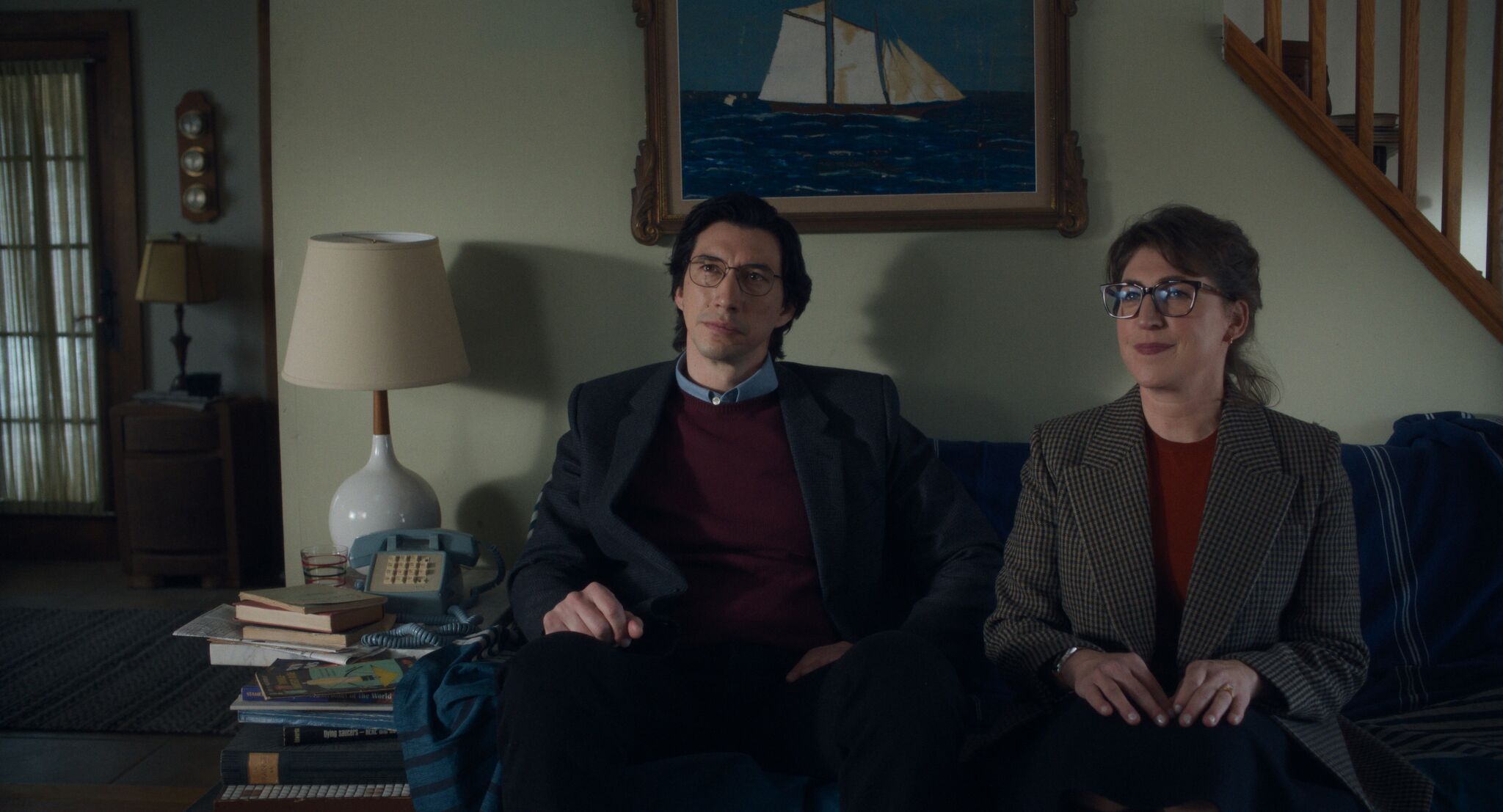
In “Father”, Tom Waits is the splendidly crustily eccentric dad. The film begins with his divorced son, Jeff (Adam Driver) and married daughter, Emily (Mayam Bialik), in a car on their way to make a rare visit to see him. Father is seen making some preparations to untidy his living quarters. The conversation between them is stilted. It never flows, and it is not loosened by alcohol, as tea is all that Father is offering. Waits has the most meaty part, and he plays it to the full with a particular highlight, his listing of a collection of illegal drugs, none of which he is taking!
In “Mother”, Charlotte Rampling is a novelist who is hosting her annual tea party in Rathgar for her adult daughters, Timothea (Cate Blanchett) and Lilith (Vicky Krieps). She is no mum, she is reserved. It seems this stilted event is the only time each year that these three women meet together, but it is quite definitely Mother’s occasion. Timothea is a rather dowdy personality, while Lilith is at an angle to society. She might have a female partner, but that is not ever made explicit. The three of them spend their time, nearly politely, circling around one another. They have little in common other than they are colour coordinated, which Mother points out. For a Dubliner, the excellent camera work reveals Rathgar and Stoneybatter in their respective red brick charm. It is a delight to observe.
In “Sister, Brother”, Indya Moore is the sister, Skye, and Luka Sabbat is the brother, Billy. They are twins and of mixed race and have a background of New York and Paris. They are quintessentially sophisticated and offbeat. We find out quite a bit about them from their conversation in a cafe in Paris. They like each other and are at ease in each other’s company – unlike Jeff and Emily or Timothea and Lilith. The apartment in which they once lived is now empty, and in one sense their return to it is the high point of the film. But that is not where Jarmusch finishes. Again, he creates an ending which is surprising and has the two siblings as one as they face their separate lives without their parents.
Given the actors who make up the cast, the acting is in the first rank. The cinematography is splendid throughout. Due deference is given to little things like the pouring of tea or lingering over a cup of coffee. Jarmusch has an uncanny eye for such detail. While it won the top prize at the 82nd Venice International Film Festival, it was rejected from the competition line up in Cannes Film Festival 2025. So controversy, of a calm kind, already surrounds it. In my opinion, Venice is nearer the mark. It is a film to be savoured.
Categories: Header, Movie Review, Movies


 No More Workhorse