
 Double Indemnity – Gaiety Theatre – Review
Dates: 24th Mar. – 28th Mar, 2026
At the opening of the play, Walter Huff (Ciarán Owens) walks out on stage and talks directly to the audience, telling us he can see us in the dark. He then gives a short introduction to the work and tells us that he knows how to commit the perfect crime, or so he thinks!
The play is set in the 1930s in Los Angeles, where we meet Huff, an insurance salesman who is good at his job but struggling to get by. Walter encounters a beautiful woman, by the name of Phyllis Nirdlinger (Mischa Barton, The O.C.). Huff is trying to sell her husband insurance, and over the course of their conversation, he starts to understand that Phyllis’s intentions are not as pure as one would expect. After several meetings, the two conspire to kill Phyllis’ husband, in what could be the perfect crime. And so, Walter gets caught in a web of lies and deceit, from which he struggles to emerge.
The film Double Indemnity was released in 1944 and was directed by the great Billy Wilder. Wilder was equally adept at comedies as he was at dramas, and also directed Some Like it Hot and The Apartment. Double Indemnity was adapted from the novel of the same name by James M. Cain. Other well-known Cain books include The Postman Always Rings Twice (1934) and Mildred Pierce (1941), which were both adapted for the screen. Double Indemnity is considered a classic of its type, creating many of the classic ‘Film Noir’ motifs.
This film adaptation follows closely on from The Talented Mr Ripley at the Bord Gáis Energy Theatre. It does say something about modern theatre that so many productions are based on films. It is clear that an adaptation brings a guaranteed audience, as many will know and love the film, but it would be nice to see more work which started life intended for the stage.
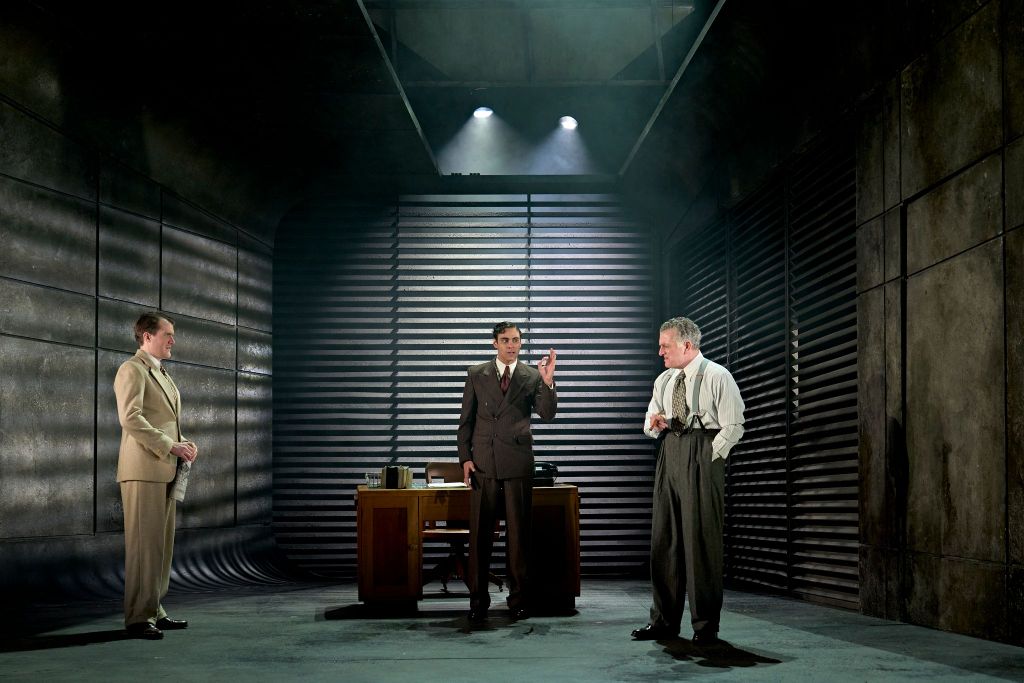
The set gives us grey, concrete walls with a slatted window on one side, which delivers an opportunity for interesting lighting effects. The piece is mainly set in offices and sitting rooms of the protagonists, and other furniture is wheeled on and off stage during the quick scene changes.
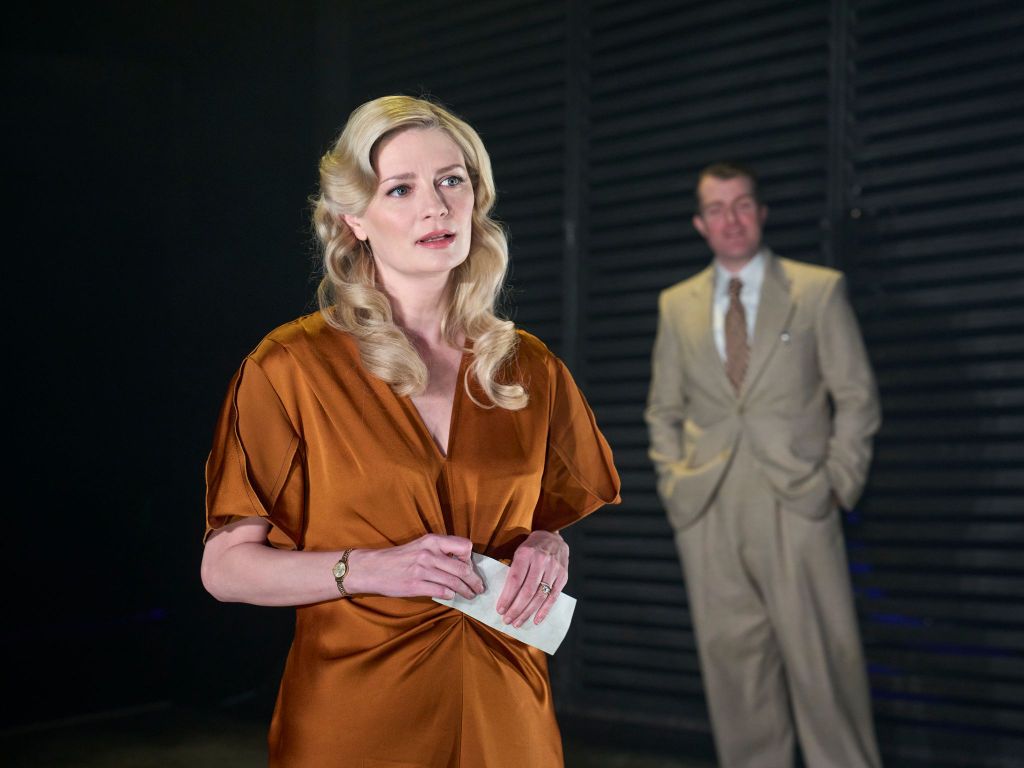
The plot sticks mainly to the film script, with the main alteration at the end, which is changed considerably. Ciarán Owens is Walter Huff, the main character of the piece. He plays Huff as an affable, well-meaning sort who inexplicably falls in love and makes the wrong decision. Mischa Barton plays the temptress Phyllis Nirdlinger, and she drifts languidly in and out of scenes. Mischa does enough to create some mystery around her character. Martin Marquez steals many scenes as the fast-talking Keyes, an old timer who has seen it all.
It is interesting to see this era come to life on stage, and the lighting and mood of the piece are well constructed. It’s a time when every office had a bottle of whiskey in the corner, which seems distant from modern office politics! The play starts slowly, but comes to life after the interval, where we learn more about Phyllis’s dubious past. The fast-paced plot doesn’t allow for much character development, but that’s often the case with adaptations of ‘dime store detective novels’. You can expect classic tropes of betrayal and greed, all played out in smoky rooms and dirty city streets.
Categories: Header, Theatre, Theatre Review


 No More Workhorse