
 The Choral – Film Review
by Frank L
Director – Nicholas Hytner
Writer – Alan Bennett
Stars – Taylor Uttley, Ralph Fiennes, Emily Fairn
Alan Bennett was born ninety-one years ago in Bradford, Yorkshire, where he was brought up. He has, since his student days at Oxford, in the early nineteen sixties, been the writer of innumerable highly successful film scripts, plays and various short stories and memoirs. In short, he is a phenomenon. He has often collaborated with director Nicholas Hytner, and he does so once more in The Choral.
The time is 1916. The war with Germany is in full spate. The place, Ramsden, is a mill town in Yorkshire. In fact, a large part of the film is shot in Saltaire, a nineteenth-century model village created on the edge of Bradford. One of the traditions of the Yorkshire mill towns is choral singing. Bennett relies on that tradition as the backdrop to this gentle drama, as to how the war ekes its way into every aspect of the daily life of the town’s inhabitants, not least the challenges of keeping the local choir going.
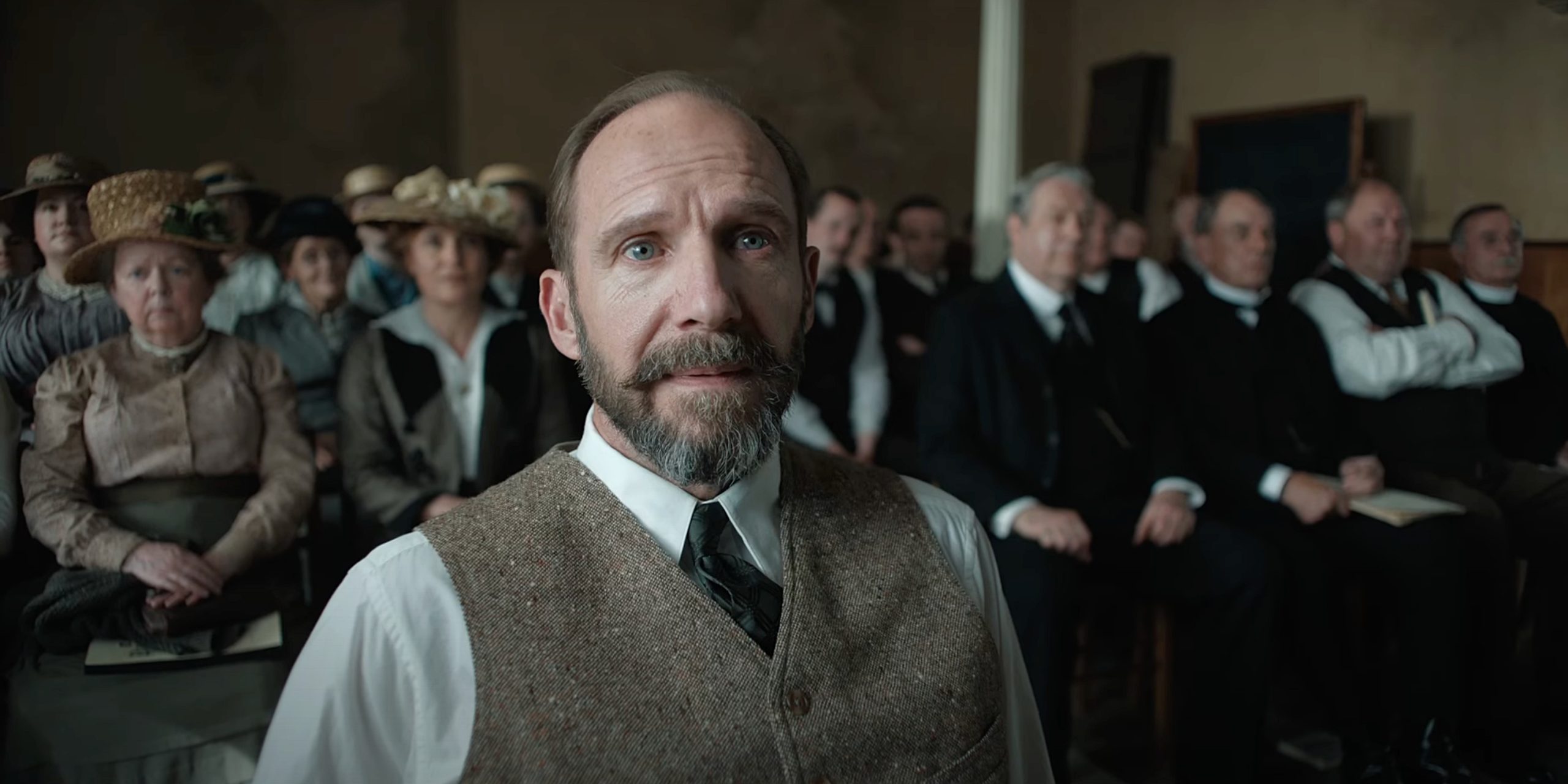
The central character is Dr Guthrie (Ralph Fiennes), a remote, austere bachelor who has come to act as choral master to the depleted choir. His musical career has been highly influenced by the amount of time he has spent in Germany, a country whose musical achievements he much admires. In the middle of a war with Germany, the choral music of Bach, Mozart, Handel, Beethoven and Brahms raises major problems as all are German or German-speaking. It greatly limits the choice of possible works to be performed. Guthrie plumps for the Dream of Gerontius by Elgar, but there are problems with that, too, given the limited musical resources.
The choir, because many of its male stalwarts have been called up or even killed, has to rely on new young recruits who have not yet been called up. There is, therefore, a need to cast a broad net to find new recruits. Auditions take place, and these permit Bennett to introduce into the story a variety of young men with their individual quirks, weaknesses and strengths. They join the elderly stalwarts and some new female recruits. It is this motley crew that Dr Guthrie has to mould into giving a public performance of Elgar’s great work.
This mixing of old and new blood allows all sorts of interesting snippets of conversation to take place amongst individuals who, in the normal course of a day, would not interact. These interactions raise many smiles as there is comedy in their gaucheness, nervousness, inexperience or prejudices. The various actors who play these roles are all admirable, but their individual predicaments or challenges are fleeting, and there are a great number of them. The story skims along.
The presence of Dr Guthrie dominates. It is a role well suited to the many acting skills of Fiennes, and he gives a suitably powerful performance. The essence of a Yorkshire mill town is well captured by the panoply of locals who populate the varied scenes. However, while it is enjoyable to watch, it provides little substance to ponder subsequently. It does not delve much below the surface. Perhaps the names of Bennett, Hytner and Fiennes raise our expectations to an unrealistic level.
Categories: Header, Movie Review, Movies


 No More Workhorse