

Interview with Rob Janicke – Author of Slacker – Part 1
by Killian Laher
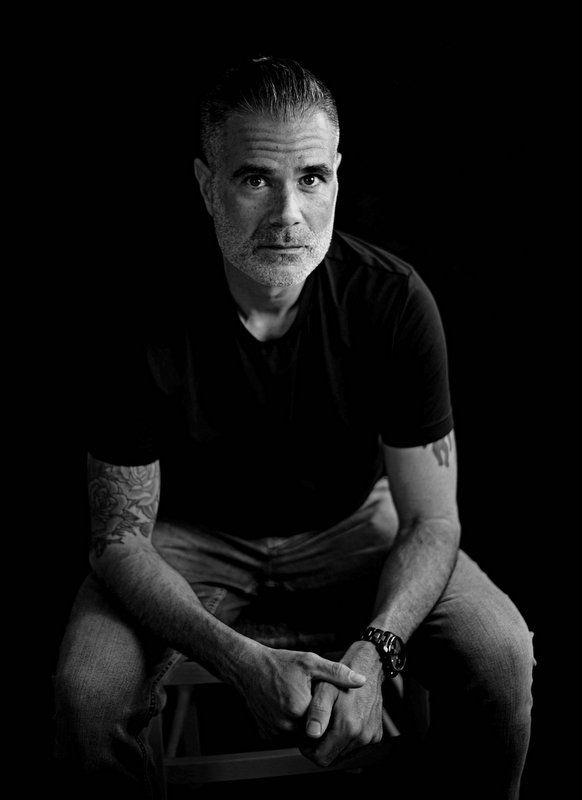
No More Workhorse caught up with US author Rob Janicke about his book Slacker and looking back on the US grunge movement. You can read our review of Slacker here.
No More Workhorse: How did you get started in your writing career?
Rob Janicke: It goes all the way back to 2004. But prior to that, I used to write poetry and song lyrics as a kid. I always loved to write; I had notebooks that I would keep. Around 2004, this site called thetruthmagazine.com were looking for a music writer. I submitted a few things, and they liked them. I stole the title for my column from Fugazi, and I called it A Steady Diet of Nothing. They let me write about whatever I wanted, and that was the beginning of writing for other people.
NMW: Is Slacker your first book?
RJ: Yeah, this is my first book. I think I always wanted to write one. Somewhere in the back of my head, I thought that I would do it someday. The global pandemic gave me time to think. And the idea came around April of 2020.
NMW: Did it take about four years to write it?
RJ: Yeah, I took some breaks here and there… you’re married, wife, kids, the whole thing. A few bouts of writer’s block and not feeling it, so I would put it away, take a break. I didn’t realise how intense the editing process would be. So I submitted what I thought was the final copy, and the editors were great. They really didn’t change much at all. They just had me rewrite some things or made me think about things in a different way. Maybe that does lend itself to a better way to write it or maybe there was a piece that I had mentioned but didn’t really go deep enough with. They did that a lot with the personal stuff that I put in. They helped me with that… because that was hard to do.
NMW: There’s quite a bit of you in the book. It is a very thorough examination of grunge, but it’s your story.
RJ: I did it like that because I am somebody who thinks about culture and about larger groups of people other than myself. I’m 52 years old, so I was a freshman when this was all exploding. My memory of it is very, very good. So many of us would have conversations about how important it seemed at the time. I wanted to use my story as an example of what I believed other people’s would be like. And part of it was, I was attached to the music so much because of the honesty in the lyrics and the honesty in the emotion of it all. I figured, if I’m going to write about that music, I owe it to those people to be as honest as I can be. So that’s what I did.
NMW: Was there anybody that you would have liked to have spoken to for the book?
RJ: I would have loved to have spoken with Eddie Vedder, Jerry Cantrell, Ben Shepherd… you name it. Any of the guys from the bands that I wrote about the most. But when I got to talk to people like Tracy Bonham, Speech from Arrested Development, their memories and their experiences were amazing, and I loved talking to them. Vaden Todd Lewis from Toadies was an incredible guy to have a conversation with. I’m very happy with who’s in the book.
NMW: I was interested in how, as well as weaving in your own personal story, you touched on what was going on culturally in music, but also outside of music, with current affairs and pop culture.
RJ: In life and the way I think about things, I try and think of a bigger picture or how and why this affects people. I think culture plays a massive role in art and music, and I think music plays a very big role in culture. It’s like a tag team, they go hand in hand. A lot of the people that wrote the music of the early ’90s were only about six, seven, nine years older than me. So they were living through the culture in the same way. And I believe that it affects how you write, it gives you something to write about. If you’re angry, you’re going to write. If you’re happy, maybe you’re going to write. If you’re sad or confused or lonely, you’re going to write.
NMW: Some people, they remember cultural events by their own life events. For example, when they graduated from college, that was the year Kurt Cobain died.
RJ: There’ll be a marker in culture that will resonate with them in one of their own personal memories. I love film, I love painting, any artistic endeavour. But there’s nothing like music that brings memory back, at least in my opinion. Dr Jakubowski, who I interviewed in the book, and her team are amazing. They’ve dedicated their lives to studying music and memory and helping people with memory loss, Alzheimer’s or dementia, and they’re finding that music has the ability to bring memory back, or to bring people back to a former version of themselves. If they can’t live in the present, whatever they’re dealing with, they can go and find a happy memory through music. There’s something chemical about it. We’re biologically drawn to music.
NMW: Do you think that is still the case with music now? Can you still have those movements that are that important, or is that just the past?
RJ: I hope so. I hope the answer is yes. I fear that it is not. We have people who care about the past and live through it and are writing about it or making films about it. And hopefully, that stays in the culture, and people will pick up on it the same way I picked up on, say, the Beatles and the Stones and Zeppelin and Sabbath. When I was growing up… I mean, those bands, for the most part, were already done. Well, the Stones have never been done!
But if people who were there, both the artists themselves, and people like me who are writing about it, or filmmakers, or anyone who wants to talk about all of that, maybe we can keep it alive. But with TikTok and social media and these snippets of songs, 30 seconds, that’s all people seem to care about. Our attention spans have become tiny. So I don’t know. I will say this, the ’90s are coming back, and I don’t know if it’s happening where you are, but here in the States, and certainly in New York, I see nine-year-old kids, five-year-old kids even, wearing Nirvana and Smashing Pumpkins t-shirts. Now, I know their parents are putting those on them, but my hope is the kid is going to be like, ‘What is this?’ And then go and listen. I’m sure they’re hearing the music from their parents as well. Maybe there’s a shot. I hope there is. It’s hard to know.
NMW: In Europe shoegaze was big briefly in the early ’90s, and then it went away very quickly. And now you’ve got kids who absolutely love it. That might happen with grunge?
RJ: I like the comparison of the genres because they are linked in several ways. That music is obviously important, it’s emotional, it’s moody, it’s relevant. Whether you were a teenager in the ’70s or the ’80s or the ’90s or now, you’re still a teenager. You still have the emotions that you’re trying to figure out. You’re trying to figure out your life. You’re wondering what you’re going to be. Maybe you’re fighting through some trauma. If you listen to music that’s deep, that has great lyrics, and they’re telling stories and messages. I don’t care which genre it is. It would be great if it were grunge as well. But just give the kids of today something to grab onto and call their own, even if it’s for a second time. I’m all for that.
NMW: Do you still think that there’s good music coming out now?
RJ: I do. If you would have asked me that maybe as little as five or six years ago, I might have said no. But I think the algorithms on some of these social media networks, Instagram, Spotify, Apple, whatever they might be in terms of finding music, they’ve gotten better. Now you have to do a little work. If you’re listening to something and the algorithm is picking up what you’re listening to and it starts to feed you things it thinks you might like, they’re not always right, but sometimes they are, and they give you things you never would have found on your own.
So yes, good music is still being made. It’s just so much harder to find. We don’t live in a monoculture anymore. We live in this, I don’t even know what you’d call it, but I remember clearly with videos on MTV and with Top 40 radio, everybody heard and/or saw the same video or song or whatever at the same time.
It’s funny when I’m in a group of people and we talk about this, and this question will come up. Say there’s 10 of us in a room or wherever. Well, the 10 of us are going to leave where we are, and we’re either going to get into a car or onto a train, and the 10 of us are going to listen to 10 different things, guaranteed. Back in the day, we’d turn on the radio. Chances are, probably listen to the same radio station or couple of stations and hear the same rotation of songs. It was easier back then for bands to get big and affect culture. Nowadays we’re our own little DJs in our own world. I don’t know that we’ll ever listen to the same thing again in unison.
NMW: Getting back to the book, did you find it easy, difficult to get it published?
RJ: That was interesting and scary. It worked out well for me. I was about 30,000 words in, and the book, ended somewhere around 65,000 words, something like that. I was halfway through what it eventually would be when I hooked up with a publisher. Prior to that, I was sending out queries and trying to contact people, and I either got a steady diet of ‘no’s or I got ignored. I was about to give up. Through a mutual friend, I said, ‘This is what I’m working on’. And she said, ‘there’s this publisher that might be interested in stuff like this. They’re working on an entertainment book right now, so maybe they’re in the market for it’. She sent me the email address, and I sent it out. Four or five weeks went by and I didn’t hear anything. I thought it was just another one of those ‘ignoring’ type of things. But lo and behold, the owner got back to me, was very interested.
They were working on an entertainment book before mine arrived, so they wanted to get into that world a little bit. But she said that it was the cultural and personal aspect of what I was getting at that gave them the idea that this is not just another music book. That’s what really attracted them. And from there we just kept going and we agreed to do this. Otherwise, I don’t know what I would have done. I would imagine I would have kept getting nos. Maybe I would have gotten lucky somewhere else. Maybe I would have self-published it. But it was my first time, so I didn’t know much.
Slacker is available through Rob’s website https://www.robjanicke.com/shop-1 and Amazon
Categories: Book Reviews, Books, Header, Music


 No More Workhorse