
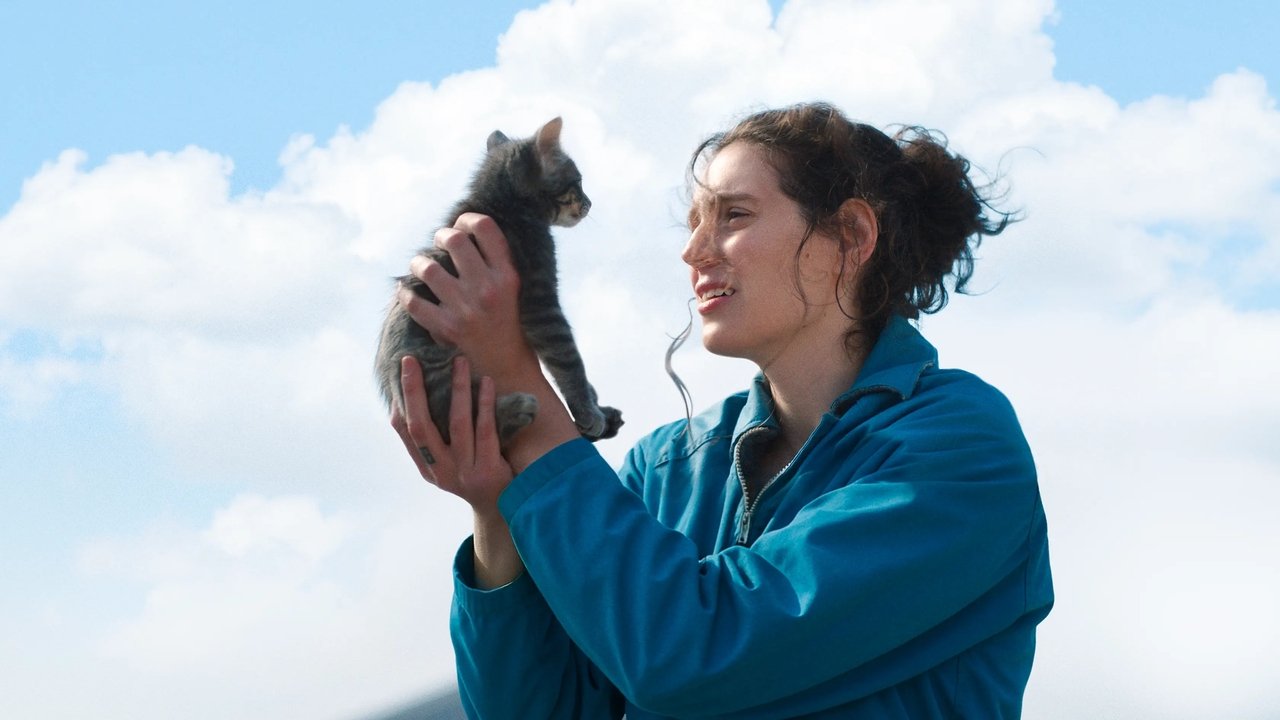
 Sorry, Baby – Film Review
by Brian Merriman
Written and directed by Eva Victor
Starring Eva Victor, Naomi Ackie, Lucas Hedges, John Carroll Lynch, Louis Cancelmi, and Kelly McCormack.
Distributed by A24
Sorry, Baby premiered at the Sundance Film Festival to acclaim, a recognition that was echoed at Cannes and other film festivals, before its wider general release. It is written, directed and stars Eva Victor.
The credits open us to speculate if Eva Victor is a Master of all trades, or not, as she invests so much into this feature, which circumnavigates a sexual assault. As a writer, she clearly has a story to tell; as a director, she has a vision that is well executed; and as an actor, she has written a central character, Agnes—a 28-year-old complex, naïve, and ambitious academic.
At times, there was a yearning for a broader artistic vision that other creatives bring to a film. But there is no doubt that this is a meticulously planned and detailed journey, refreshingly told by a creative artist with a visibly appreciated skill set.
Interestingly, a detective once explained trauma to me. He said often the person most traumatised by a crime can be someone not in the room. If you are present and see a criminal aim a gun towards the ceiling and shoot, you know you will not be killed by the shot. If you are at a locked door outside, looking for a loved one and hear a shot, you don’t know what is happening, and often that fear can traumatise more than being present and having some control over the violent situation.
Eva Victor does not show us the sexual assault. We are left outside at a distance and can only speculate. The 104-minute-long story is episodic and unfolds at a slow pace, but it doesn’t answer all our possible questions, which might alleviate our trauma.
Sexual assault in a place where there is a power discrepancy, such as a third-level academic institution, is an important topic. Though billed as a ‘black comedy’ about a very unfunny situation, the handling of some of the issues raised is, at times, as problematic as the pace. The ‘black comedy’ element may lean on the rather implausible response from the Institution and their rationale for inaction, which is just not true in law.
Dramatically, there is Agnes’s recall of the event that includes her taking part in various activities that some might use to argue consent in a defence case. She doesn’t contradict that. None of this is teased out.
Agnes has not left her rural and isolated locality and is not necessarily equipped to deal with the trauma that is visited upon her. Agnes may not be a person in whose company you might ordinarily choose to spend 104 minutes. She is naïve, odd, private and quirky.
Her personal warmth is showcased in the very close relationship she enjoys with Lydie, her lesbian best friend, who shares her bed during visits in a platonic way. Lydie (an optimistic, warm performance by Naomi Lackie), in turn, leaves the picturesque Ipswich, Massachusetts, to build a life with partner E.R. Fightmaster’s Fran in New York, who has a strikingly similar physical resemblance to Agnes. Lucas Hedges’ Gavin redeems the male sex and offers validation to Agnes’s heterosexual attraction in an affectionate sub-plot.
The darker side is in the hands of an equally dysfunctional group of ex-college friends, with Kelly McCormack’s well-played, weird Natasha being the barometer for all that is left said and unsaid. They don’t really know or like each other much. Louis Cancelmi is the charismatic tutor, Preston Decker, who is the perpetrator, but disappears from the plot and the workplace immediately afterwards. Yet, he had previously stayed on when he engaged in a higher level of sexual activity with another student – possibly a more serious offence than the assault central to this plot. These inconsistencies were all the more visible in the slow and deliberate telling of the story.
It is a difficult post assault journey for Agnes, who lacks the immediate skills to cope with her ordeal, as do the local support services. Lydie is her rock. Agnes’s realisation emerges during the episodes in a plausible and vulnerable way, showing Victor’s acting skills at their best.
There is an adorable baby, some beautiful locations and an untypical telling of an assault, not from a condemnatory or victim-driven perspective, but from a more personal one, which allows us to experience the various emotional and rational stages of dealing with such a trauma.
Agnes deals with her ordeal in a manner that encourages us to believe that this trauma will not do irreparable damage to her, as some less fortunate others who also experience this unwanted behaviour. Her endearing monologue with the baby is an uplifting insight into her future prognosis.
Categories: Header, Movie Review, Movies


 No More Workhorse