
Death of a Salesman – Gaiety Theatre – Review
by Frank L
Written by Arthur Miller
DATES: 15th Apr. – 19th Apr.
Spirit Aid – A Charity founded by David Hayman in 2001.
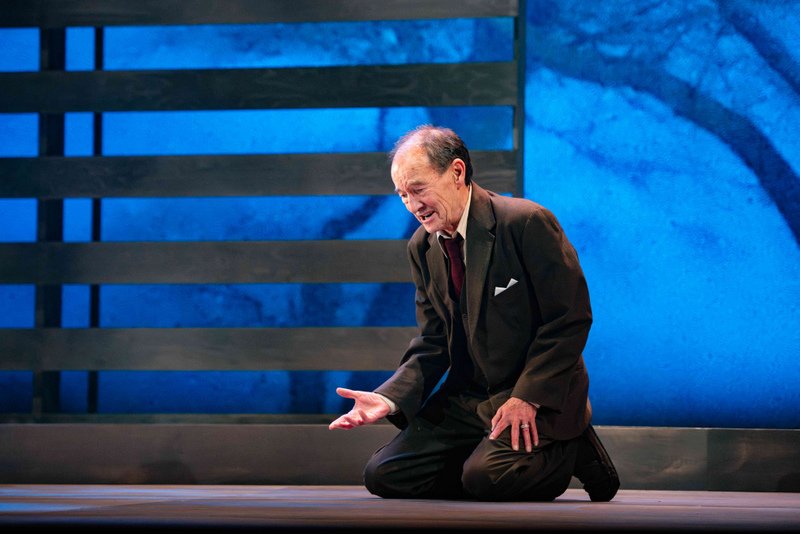
The play premiered in 1949 and has become a classic. Its central character is Willy Loman, and in its subsequent revivals on Broadway, the role has been played by Dustin Hoffman and Philip Seymour Hoffman. In this touring production from Glasgow, the role of Willy is played by David Hayman, well known for his role in the long-running crime thriller “Trial and Retribution”.
It is a play about many things, including parental expectations, the pressures of consumerism, the need to succeed, the challenges of mental health and delusions of various types. Willy has two sons in their thirties, Biff (Daniel Cahill) and Happy (Michael Wallace). Biff has not found himself in life, having been a football star in his youth. He is adrift. Happy is more engaged in the world of commerce, but he is looking for a big break with some new idea that will make him rich. Willy’s wife, Linda (Beth Marshall), is more grounded in reality as she manages to balance the household budget, which is supported by various forms of credit. Willy’s mental powers are in decline, and in particular, his powers as a salesman. He is finding the physical rigours of being on the road in New Jersey difficult and longs for a job in New York City, where he lives.

Miller originally intended to call the play “The Inside of his Head”, and the mental delusions transfixing Willy take concrete form in the play by the several appearances of his long-deceased brother Ben (Stewart Ennis). There are a host of smaller characters, including neighbours, Willy’s boss and a woman with whom Willy had an extramarital relationship. It is a large cast of twelve actors.
The staging is open with two sets of chairs on either side of the stage where members of the cast sit and observe. Three of the cast are musically gifted and provide accompaniment on violin, flute and mandolin/dulcimer. Their music adds a poignancy to the gradual mental decline of Willy, which is being portrayed.
Miller’s script remains engagingly vibrant. He creates conversations that portray Willy’s increasing mental failings, for example, the way he dismisses Beth when she tries to intervene in a conversation. Hayman draws you into the increasingly delusional state of Willy’s mind.
It is a privilege nowadays to see a play with a large cast. In this production, Hayman leads the troupe of actors into the complex challenges that the pursuit of the American dream creates. There are dark moments, but there is comedy, which makes the tragedy bearable. For all its seriousness of purpose, it remains revelatory. Miller, with Death of a Salesman, wrote a play for all times, and this is a fine iteration of it.

Categories: Header, Theatre, Theatre Review


 No More Workhorse