
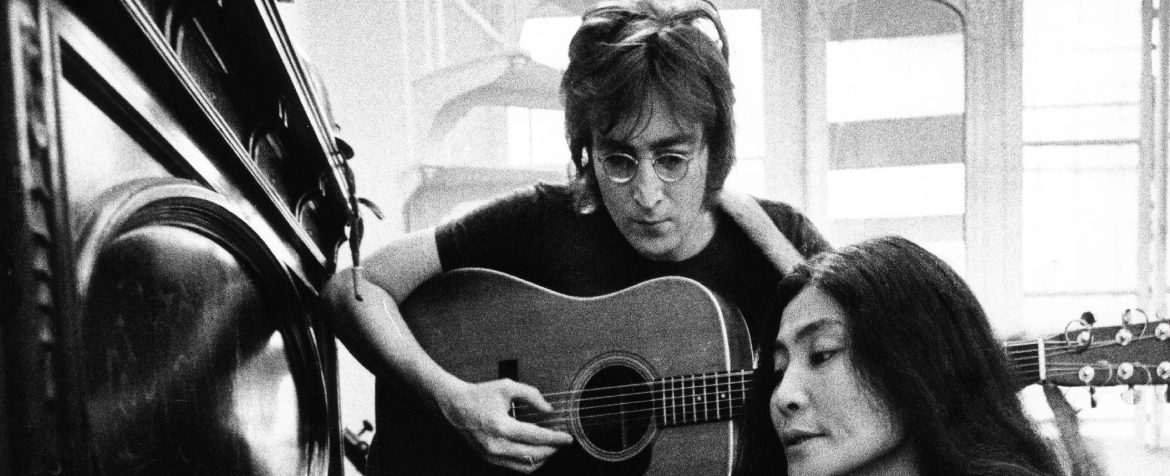
 One to One: John and Yoko – Film Review
by Frank L.
Directed by Kevin MacDonald and Sam Rice Edwards
It is 1972, and America is divided over the Vietnam War. On the domestic front, the President, Richard Nixon, is standing for re-election. The days of flower power are a distant memory. Into this challenging flux, John Lennon and Yoko Ono flee England and choose to live in a modest loft apartment in the West Village, New York. They have issues with the immigration authorities. So, at one level, they are like many new arrivals, but unlike the vast majority of new arrivals, they are famous, rich and newsworthy.
MacDonald and Edwards make their modest apartment the epicentre. In particular, their bed, with a large television at its foot, is central to their existence. In deference to Lennon’s statement that he spent most of their first year in the city watching television, MacDonald and Edwards show a stream of contemporary news clips recording the tumultuous political events taking place, which clips are appropriately interspersed with ads for a variety of consumer goods. This is how John and Yoko would have observed them from their bed.
The film charts their involvement with various anti-establishment happenings, in particular a “Free the People” concert, which unravelled over factional infighting before it could take place. John and Yoko then turned their energy and zeal into creating a benefit concert for the Willowbrook State School for children with special needs, though that term was not used then. The contemporary film footage gives a glimpse of what was taking place there, and it beggars belief. The resultant “One to One” concert would be the last that Lennon would play. The footage from it has been reconfigured with the remixed audio.
The film is also enhanced by a series of recorded telephone conversations of both John and Yoko, which allow you to eavesdrop on everyday conversations which have lain dormant for a long time. They help to bring to life the day-to-day concerns of John and Yoko as they flourished in their newly adopted city.
As the contemporary footage is over fifty years old, it evokes a time which now appears long past. One stark difference is the ease with which people smoked without any inhibition. The different cultural attitudes toward smoking are exemplified by the sight of an enormous advertisement for Marlboro cigarettes. It both shocks and surprises.
MacDonald and Edwards have created an insight into a part of John and Yoko’s life as new arrivals in the States. By using so much contemporary film footage, they have created the world in which John and Yoko lived. They have recreated that unsettled time and how John and Yoko were both participants and observers of it. It makes for a fascinating and absorbing glimpse of New York and America from their perspective over fifty years ago.
Categories: Header, Movie Review, Movies


 No More Workhorse