
 Burnt Out – Lyric Theatre – Review
by Cathy Brown
Dates: Sat 7 Oct—Sat 4 Nov 2023
Photo credit Carrie Davenport
Burnt Out by Gary Mitchell, A Lyric Theatre, Belfast Production
It’s been seven years since a work by Belfast playwright Gary Mitchell was staged at the Lyric Theatre, the football comedy Smiley. Mitchell returns with Burnt Out, which opens the 2023 Belfast International Arts Festival and sees him revert to the genre of political thriller with which he made his name. In Burnt Out, Mitchell is concentrating less on the wider sectarian conflict in Northern Ireland and more on the familial divisions that can occur as the Protestant community reinvents itself following the peace process.
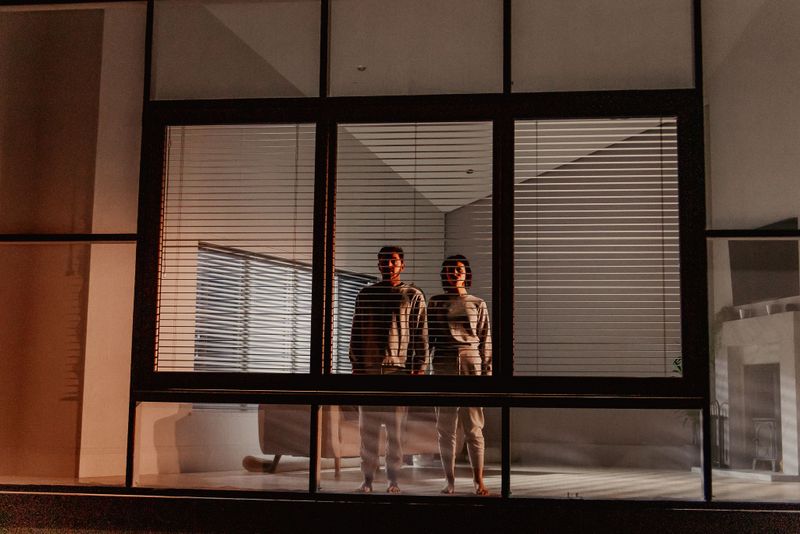
As the play opens, upwardly mobile couple Michael (Terence Keeley) and Cheryl (Kerri Quinn) rate their happiness at 9 on a scale of 1 to 10. A schoolteacher and hairdresser respectively, they have moved on from their working-class Protestant beginnings and into a new modern home that Mrs Hinch would approve of; all pale wood, grey and personality-free. Michael would like to start a family, but Cheryl isn’t so keen, happy to keep life just as perfect as it is right now.
That perfection is shattered by the arrival of Michael’s dodgy brother Donny (Caolán Byrne) who has an eye for Cheryl and a chip on his shoulder about how Michael has moved up in the world at the expense of his older siblings. Donny delights in telling the couple that the annual 12th of July bonfire is being built right opposite their house and it isn’t long before their lives are plagued by constant noise, escalating intimidation and threats of violence. Donny and his suspect girlfriend Lesley (Shannen McNeice) assure the couple that they can make their problems go away, for a price, but who exactly are they being protected from?
Director Jimmy Fay’s production channels a convincing film noir vibe, featuring impressive projections by Neil O’Driscoll displayed across Conor Murphy’s pitch-perfect set to create an atmosphere of claustrophobic tension. Gareth McConaghie’s incessant soundtrack adds to the encroaching sense of menace, but pacing issues mean that the first half feels overly long and repetitive, while the second half tries to pack in too much. Regular visits from local police officer PC McGoldrick (Caroline Curran) tend to disrupt the build-up of tension and feel uncertain in tone.
Kerri Quinn is convincing as the feisty, strong-willed Cheryl, using her comic timing to great effect and charting Cheryl’s emotional turmoil with believable ease. Terence Keeley feels childish in comparison, although his infantile reactions in the scenes with his older brother work to the play’s advantage. Caolán Byrne, so good in the recent production of The Beauty Queen of Leenane, captures Donny’s empty swagger well, but his portrayal is hampered by the stereotypical nature of the characterisation and an unexpected swerve into misogynistic ranting towards the end.
There is undoubtedly a personal element to this work – Mitchell was forced to leave his home in Rathcoole in 2005 following intimidation – and here, again, he grapples with questions of identity, policing tensions and a class of people who feel left behind by politicians and, to some extent, their own community. As a study of the conflict between modernity and tradition, Burnt Out succeeds to an extent. Mitchell is skilled at fashioning scenes of strained, jabbing confrontation but the play suffers in the final scenes, where the violent, dramatic denouement is resolved with an unconvincing lack of consequence.
In this time of ongoing uncertainty, where questions of leadership and identity prevail, Burnt Out reflects the conflicts that continue to dominate the discourse in Northern Ireland.

Categories: Header, Theatre, Theatre Review


 No More Workhorse