
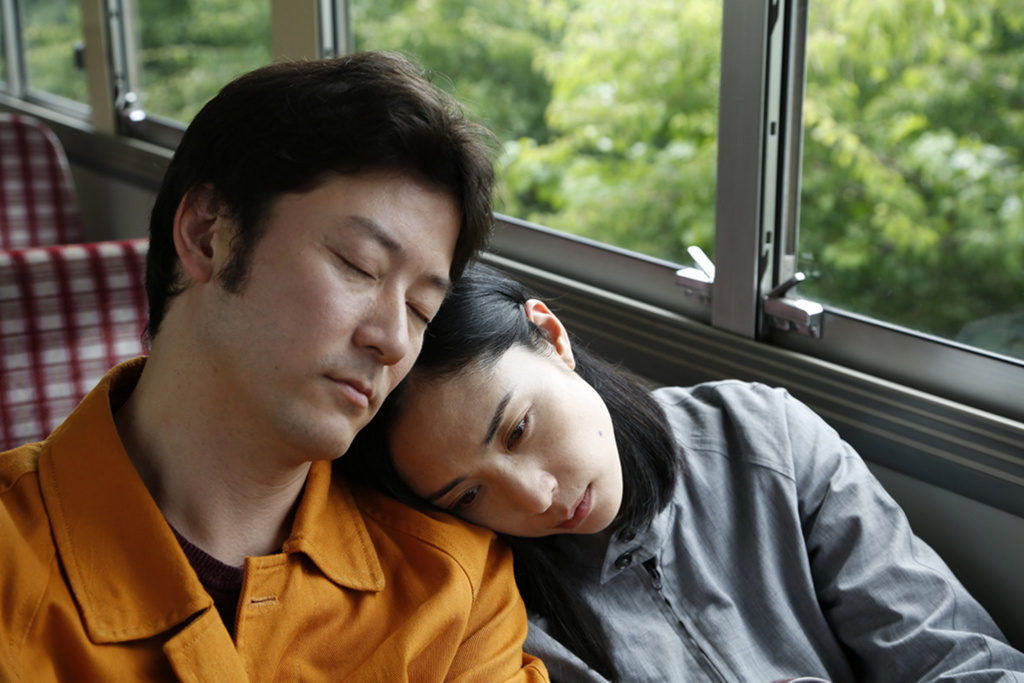
Journey to the Shore – Film Review by Conor MacNamara
Director: Kiyoshi Kurosawa
Writers: Kiyoshi Kurosawa (screenplay), Kazumi Yumoto (based on the novel by)
Stars: Eri Fukatsu, Tadanobu Asano, Masaaki Akahori
An otherwise standard love story manages to walk the near-impossible line between Horror and Romance in Journey to the Shore, directed by Horror flick veteran Kiyoshi Kurosawa.
Indeed, it’s Kurosawa ‘s background in horror that keeps the central themes balanced and spinning, with the central love story serving as a perfect foil for the films sudden shifts into the surreal and downright sinister, in the style so unique to Japanese horror.
Our story revolves around a piano teacher widowed by suicide, plagued by the sudden return of her dearly departed husband, who takes her on a roundabout tour of the people and places that helped him along on his spectral journey home in the familiar “settling unfinished business” motif. However, the end result is anything but a by-the-books ghost story.
What Kurosawa’s style of Eastern horror gets right, which has so eluded western directors and writers, is its proximity to everyday life: the monsters and serial killers are replaced with familiar mundane settings and tones, with just enough things off to make the overall scene unnerving and threatening, which he can imbue even into his non-horror films. Childhood regret, domestic abuse, and the lack of closure surrounding a loved one’s death make for far more effective monsters than simple spectres.
The arc of the films plot is episodic rather than linear, with the couple travelling across the spectrum of human tragedy, in which all of the seemingly normal lives visit invariably hide some form of tragedy or horror, usually not too far from the couples own unresolved issues.
Unlike the Patrick Swayze variant of the romantic ghost, Kurosawa’s creations are only loving at first glance, instead built around notions of remorse and loss. Kurosawa claims the film is a cinematic interpretation of the Japanese custom of Mitoru – the practice of watching over the terminally ill until they expire, in addition to the thematic message of marital infidelity and loss.
The end result then is a series of vignettes, which while engaging often struggle to agree on an overall message to the audience. Nevertheless, there are some seriously intense scenes that may not have otherwise existed had all the different thematic elements been blended together.
Despite its strengths the film is near-fatally undermined by its glacial pacing; long meandering stretches of narrative nothingness and an ending that just never seems to arrive at the right moment leads to what the film does get right becoming bogged down in repetitiveness and the rehashing of old ground.
What we have then is a story that at its core it remains a love story, albeit a sardonic twist on the ‘love story’ template, with enough themes of guilt and loss tacked on to keep it from getting penned into a definitive genre. If one can overcome the crippling pacing, they will find a story dripping with both empathy and eeriness, and a genuine sadness that is not easily emulated. Perhaps horror, not romance, is the more appropriate experience to have when discussing this type of subject matter.
Categories: Header, Movie Review, Movies


 No More Workhorse