
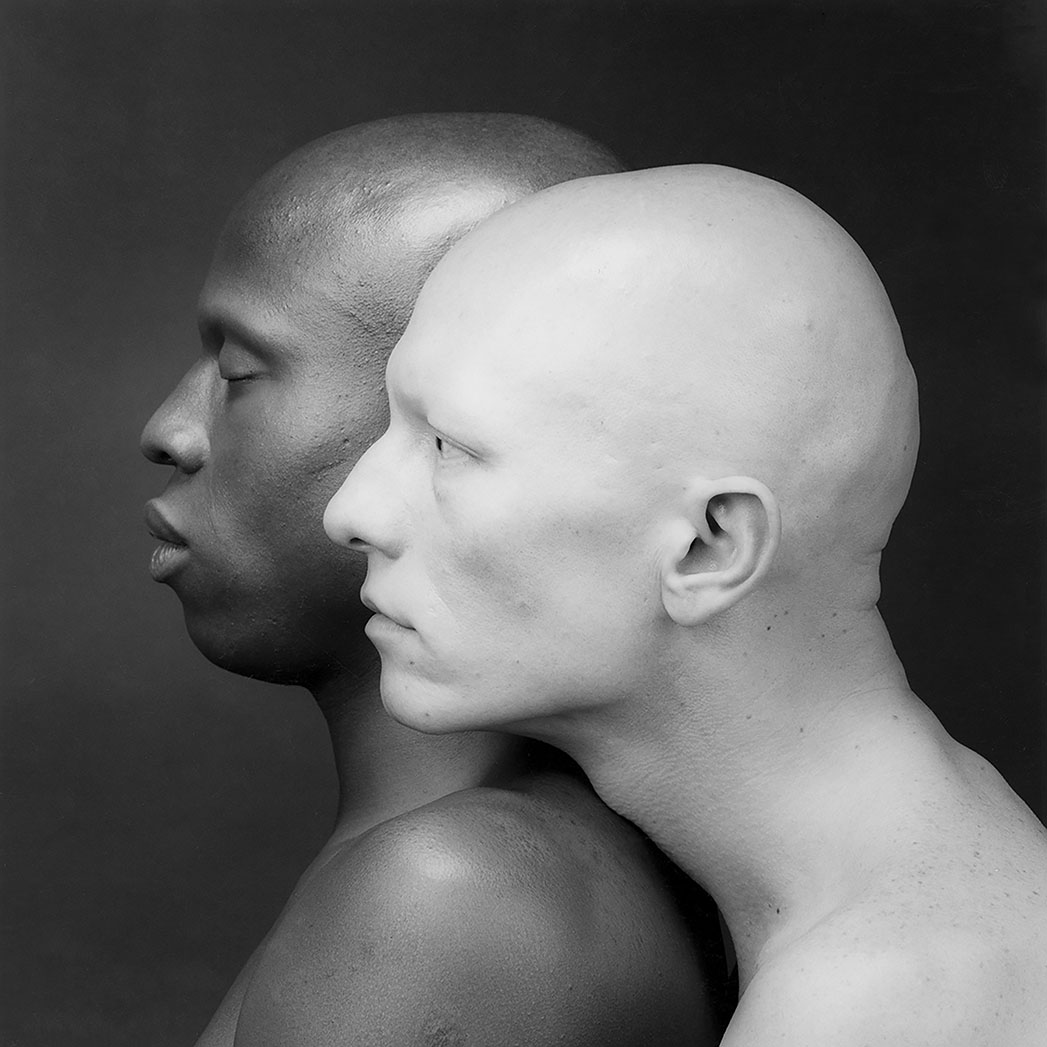
Mapplethorpe: Look at the Pictures – Film Review
Directed by Fenton Bailey and Randy Barbato
Reviewed by David Turpin
Fenton Bailey and Randy Barbato’s Mapplethorpe: Look at the Pictures is a HBO-produced documentary on the controversial American photographer Robert Mapplethorpe, which has been granted a cinema release for reasons not entirely justified by its content. The film comes nine years after the last feature documentary on Mapplethorpe – James Crump’s Black White + Gray (2007) – which benefited from a more concise and focused approach than Bailey and Barbato’s sprawling overview, but which did not enjoy the same level of access granted to the newer film.
Inevitably, the film begins with footage of Senator Jesse Helms, fulminating against the obscenity of Mapplethorpe’s S&M photographs, after the photographer’s death, while his final exhibition “The Perfect Moment” continued to tour the US. It’s indicative of Bailey and Barbato’s oddly superficial approach, however, that what follows returns just briefly to this controversy – and does so only in the context of a narrative of heroic vindication that sidesteps the issue of Helms and company’s use Mapplethorpe as a straw man in a campaign that ultimately targeted the already limited public funding of arts in the US. There’s arguably a film in itself to be made on this subject, but Bailey and Barbato seem more interested in providing a whistle-stop tour of Mapplethorpe’s “greatest hits” – much of which is incongruously accompanied by an incessantly cod-urgent musical score of a type more often heard sound-tracking hourly bulletins on Sky News.
A number of Mapplethorpe’s friends, family members, and acquaintances appear as talking heads – and their contributions range from candid reminiscences to narcissistic musings that are, in their own way, equally revealing. A notable absence is Patti Smith, who has reflected her own relationship with Mapplethorpe in the book Just Kids (2010) and the album The Coral Sea (2006), made in collaboration with Kevin Shields. Her non-participation is keenly felt here, particularly as few of the other contributors possess her empathy and erudition. That’s not to say that some of the gossipy anecdotes thrown up aren’t interesting – they are, indeed, perhaps the only possible response to this enigmatic, even contrary, figure. At the same time, neither interviewees nor film are particularly interested in challenging, or even expanding, the standard Mapplethorpe narrative.
The film’s interest is almost entirely in Mapplethorpe’s “sex” photos – which are often displayed in caffeinated slideshows that dilute their undimmed capacity to disquiet. The focus on Mapplethorpe’s nudes and S&M photos is justifiable in the sense that it is around these works that much of the drama of his life and afterlife has orbited – but at the same time it yields a pretty reductive portrait of the scope of his artistry. Mapplethorpe’s beautiful flower photographs, for instance, are dismissed as an “innocuous” side-line with which he whiled away idle hours when there were no pendulous genitalia to snap. This seems like extremely short shrift with which to deal with what must be the most inexplicably – and therefore troublingly – “erotic” photographs in Mapplethorpe’s oeuvre. Similarly, his work as a commissioned portrait photographer is presented as a money-making exercise and nothing more. Curiously, these moments of the film are heralded by a shot of Mapplethorpe’s portraits of Laurie Anderson – an ironic choice given that the brief note with which Anderson accompanied these images on the sleeve of her 1989 record Strange Angels is more insightful than almost anything in the Mapplethorpe: Look at the Pictures.
In the absence of a particular point of view, Bailey and Barbato do explore a number of interesting diversions. Mapplethorpe’s younger brother Edward is clearly a valuable interviewee, and he is disarmingly open about his admiration for his brother, as well as the friction caused by his own efforts to launch a career in photography. The Mapplethorpe family’s priest also makes an appealing appearance, although his suggestion that Mapplethorpe’s S&M photographs consciously restage Catholic iconography is a little wobbly. Unfortunately, it’s also on this subject that the Bailey and Barbato attempt to goose viewers with a ridiculous moment in which an interviewee’s comments on Mapplethorpe’s interest in Satanism are cut short by the sudden interjection of a lawnmower outside. Tongue-in-cheek or not, as suggestions of infernal intervention go, it’s about one step up from that YouTube video of the lady who claims Satan is communicating through her toaster.
The most dispiriting contributions, however, come from the curators of the Getty and LACMA joint exhibition that provides the documentary with its bookends. They mug shamelessly for the camera throughout, with the nadir reached by one curator’s chortling observation that placing the phallic study Man in a Polyester Suit next to Mapplethorpe’s portrait of Louise Bourgeois holding a phallic sculpture constitutes a “curatorial pun”. Given the astonishing proliferation of penises throughout Mapplethorpe’s work it’s fairly unclear why this particular “pun” tickles him so – but one does hope that the actual curatorial process isn’t quite as facile, or as hagiographic, as it appears here.
Categories: Header, Movie Review, Movies


 No More Workhorse