
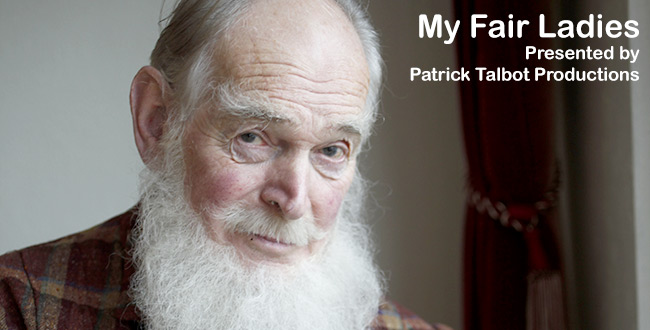
My Fair Ladies – Written by Des Keogh
Des Keogh has created this monologue from George Bernard Shaw’s liaisons with various actresses over his long life. He did not marry until he was almost 42 and then only having received a proposal of marriage from Charlotte Payne-Townsend, an Irish heiress of an age similar to his own. It appears to have been a “happy marriage” regardless of the rumour that it was never consummated by mutual agreement. Keogh portrays Shaw reminiscing in old age on some of his lady friends in years gone by. He bears a good likeness to Shaw in old age even if the eyebrows are somewhat overdone.
The stage has a glass screen as a backdrop in front of which is placed a small kidney shaped writing desk and chair, a day bed and an upright high backed chair and Keogh uses all three at different times. Interspersed throughout the piece are various operatic pieces from Mozart’s Marriage of Figaro, Gluck’s Orfeo and Bizet’s Carmen even if their relevance is not always obvious. At the beginning the volume was simply too loud. There are various actors mentioned such as Ellen Terry and Florence Farr but the main one, of course, is Mrs. Patrick Campbell. In fact the most successful part of the show is when Keogh reads from Pygmalion the scene where Professor Higgins brings his protégé Eliza Doolittle to meet his mother, Mrs Higgins, who is taking tea with her financially straitened genteel friend Mrs. Eynesford Hill and her somewhat wet son Freddie. What was an interesting nugget was that Mrs. Pat who created the first Eliza was in her late forties when she did so! Keogh reading all parts brought out the high comic quality of the encounter. Less successful was his telling of the well-known slice of repartee between Shaw and Winston Churchill. There was the distinct feeling it had been included as a filler.
The strangeness of the Shaw marriage is probably a fruitful area to mine for a theatrical creation but Keogh is altogether too genteel in his approach as is exemplified from the outset as he addresses his audience as “ladies”. He was right as regards their gender as the vast majority of the audience was female “d’un certain age”. At the end there was the feeling that this theatrical project could have grappled with so much more than it did.
Review by Frank L
Categories: Header, Theatre, Theatre Review


 No More Workhorse